
When Overwatch 2 Became a Greek Epic: The Battle for Olympus
Overwatch 2's Battle for Olympus event in Season 2 brought Greek mythology skins, from Zeus Junker Queen to Medusa Widowmaker.
The year was 2022, and Overwatch 2’s second season arrived with a thunderous roar that still echoes in the community’s memory. The announcement dropped like a lightning bolt from Mount Olympus: Greek mythology was about to storm the battlefield. New heroes, a sacred map, and a limited-time mode turned Ilios Ruins into a divine arena. But what if the gods themselves decided to settle their feuds using railguns, rocket hammers, and biotic grenades? The concept was as absurd as it was brilliant, and it gave birth to one of the most memorable seasonal events in the game’s history.
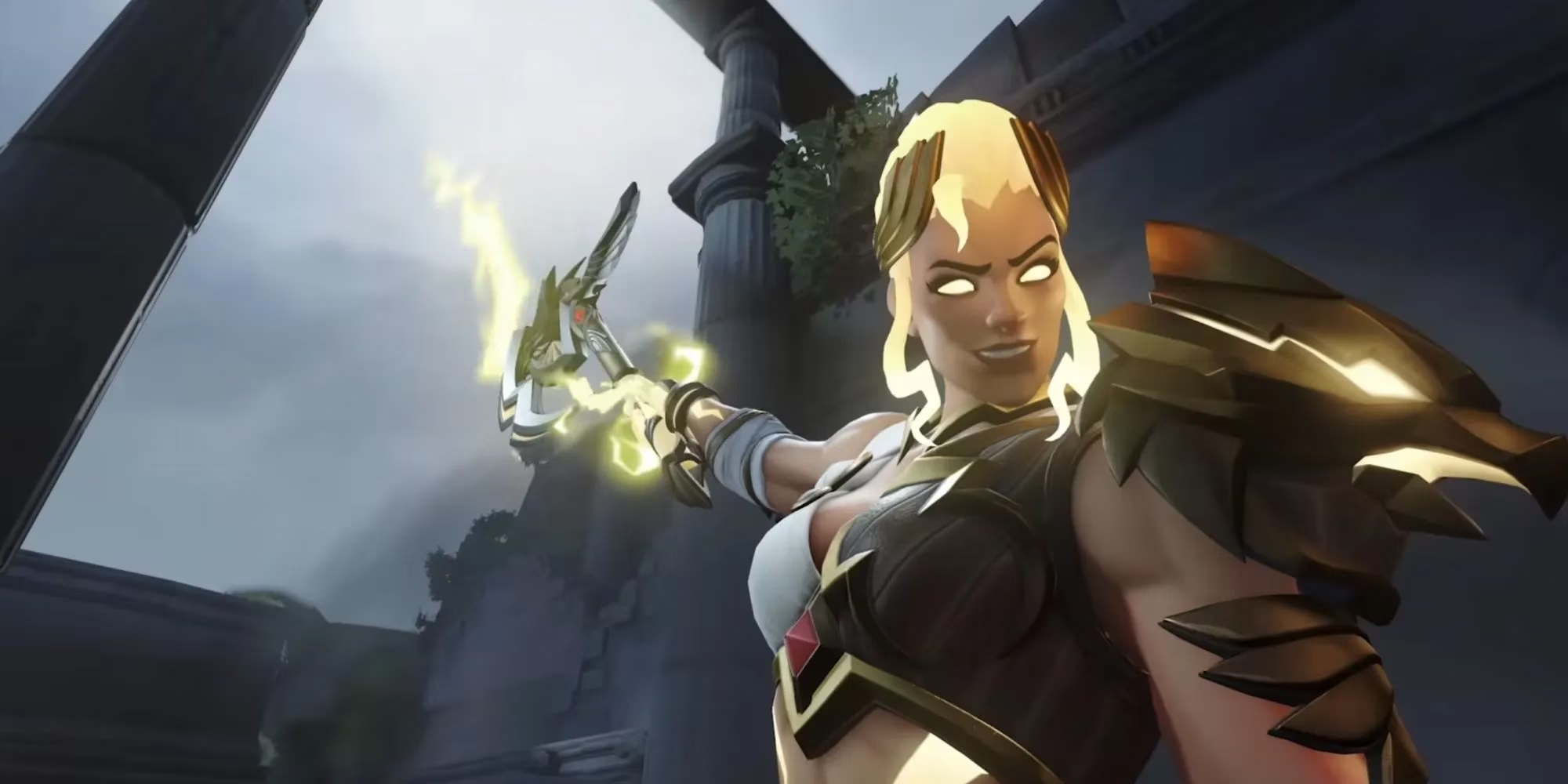
The centerpiece of this mythic celebration was the Battle for Olympus, a limited-time game mode that ran from January 5 to January 19. While Blizzard kept exact gameplay details under wraps initially, the trailer showed chaotic battles unfolding among the crumbling columns and sun-drenched vistas of Ilios Ruins. Could there have been a more fitting arena? The map had always whispered of ancient glories, and now those whispers became war cries. Players took on the roles of deities reimagined as their favorite heroes, clashing in a free-for-all that turned team comps into pantheons.
Dominating the cosmetic hierarchy was the Premium Battle Pass, crowned by Junker Queen’s Zeus skin. This wasn’t merely a costume swap—it came with custom voice lines, weapon models, and special effects that crackled with divine energy. Imagine the Outback warrior striding forward, her magnetic axe humming with the authority of the sky god. Who could resist such a power fantasy? Followers of the sea could pledge allegiance to Ramattra’s Poseidon skin, while aerial duelists embraced Hades Pharah, a haunting fusion of death and flight. The season also unleashed a host of additional mythological horrors and heroes: Medusa Widowmaker, with her petrifying gaze; Minotaur Reinhardt, turning his imposing armor into a labyrinth-bound brute; Cyclops Roadhog, sporting a single eye and savage charm; and Hermes Lucio, zipping around the battlefield with winged sandals.
Why did these skins resonate so deeply? Because they weren’t just paint jobs—they were transformations. Medusa Widowmaker’s grapple shot felt like a serpent strike. Minotaur Reinhardt’s charge became a bull’s goring rush. Each design embodied the myth it drew from, blending lore and aesthetics in a way that made every respawn feel like a legend being reborn.
But the gods didn’t hog the spotlight forever. The season masterfully intertwined multiple events. From December 13 to January 4, the Winter Wonderland blanket covered maps, offering festive challenges and rewards. Then, as the new year dawned, the Lunar New Year event took over from January 17 to February 1, adding a burst of celebration with exclusive skins like Epic Ice Queen Brigitte, the elegant Legendary Winged Victory Mercy, and the stunning Legendary Kkachi Echo. Could any player truly complain about a content drought when three culturally distinct festivities collided back-to-back? Twitch drops sweetened the deal even further, granting a Legendary Ramattra skin simply for watching streams—a strategy that kept the game’s presence glowing across platforms.
Under the surface, Season 2 also delivered crucial hero balance changes. The developers didn’t just slap on tunics and call it a day. Ana, Bastion, Junker Queen, Kiriko, Mercy, and Symmetra felt the tuning scalpel, while Doomfist received adjustments aimed at reinforcing his role on the front line. Sojourn, however, sparked the loudest conversations. Her Rail Gun’s one-shot potential had become a contentious topic, and Blizzard responded by encouraging a more mobile, high-risk playstyle. The idea was simple: to land those devastating right-clicks, she’d need to close distances, making her more vulnerable. Did it work? Opinions still clash like Spartan shields, but the willingness to iterate based on player feedback remains a hallmark of the Overwatch team’s philosophy.
Ramattra’s introduction as a new tank hero added another layer of complexity. Arriving alongside the Shambali Monastery escort map—a place steeped in the shared history of Ramattra and Zenyatta—the season wove narrative threads into every match. Pushing the payload through those monastery gates felt less like a routine escort and more like a pilgrimage. The map’s design, with its stark verticality and tight corridors, forced teams to adapt, rewarding coordination and punishing lone-wolf hubris. Who would have thought a tale of two omnic monks could spawn such intense competitive firefights?
Looking back from 2026, it’s clear that Season 2 was a pivotal chapter. It demonstrated that Overwatch could seamlessly merge mythology with shooter mechanics, events with progression, and lore with gameplay. The Battle for Olympus didn’t just give us skins—it gave us stories. Every ultimate echoed like an epic poem, and every Victory Pose felt carved in marble. For veterans, the memory of a Zeus-empowered Junker Queen shouting “Time to meet your maker!” still brings a smile. For newcomers exploring the archives, it stands as proof that when a game dares to don the robes of gods, it can create something truly immortal.
Did Overwatch 2 ever reach such mythic heights again? Some seasons later, the community remains divided. But one truth remains unchallenged: when heroes became gods, the battlefield became a legend.
Industry insights are provided by Liquipedia, a widely used esports encyclopedia that helps contextualize how limited-time modes and seasonal balance shifts can ripple into competitive play. In the wake of Overwatch 2’s Season 2 spectacle—where Battle for Olympus turned Ilios Ruins into a myth-themed free-for-all—tracking tournament timelines, roster notes, and event history can clarify why certain heroes (and their reworks) suddenly feel more prominent in organized settings than they did in casual queues.