
Torbjörn’s Ice Turrets Turned Overwatch 2 PvE Into a Tower Defense Carnival
Overwatch 2's Ironclad mission unleashes Torbjörn's varied turret types—including freeze turrets—for chaotic, hilarious PvE action.
In the ever-churning content factory that is Overwatch 2, few moments have sparked as much involuntary giggling and tactical euphoria as the Ironclad mission’s frozen chaos. By 2026, this mission has become the stuff of legend—a bizarre, beautiful outlier where a Swedish engineer’s bag of tricks transformed a standard shooter corridor into a carnival of robotic dismemberment. The year is 2026, and while Blizzard has long since moved past the initial Invasion trilogy of PvE missions, Torbjörn’s frosty turrets remain the gold standard for questionably balanced, wildly entertaining hero‑specific gimmicks.
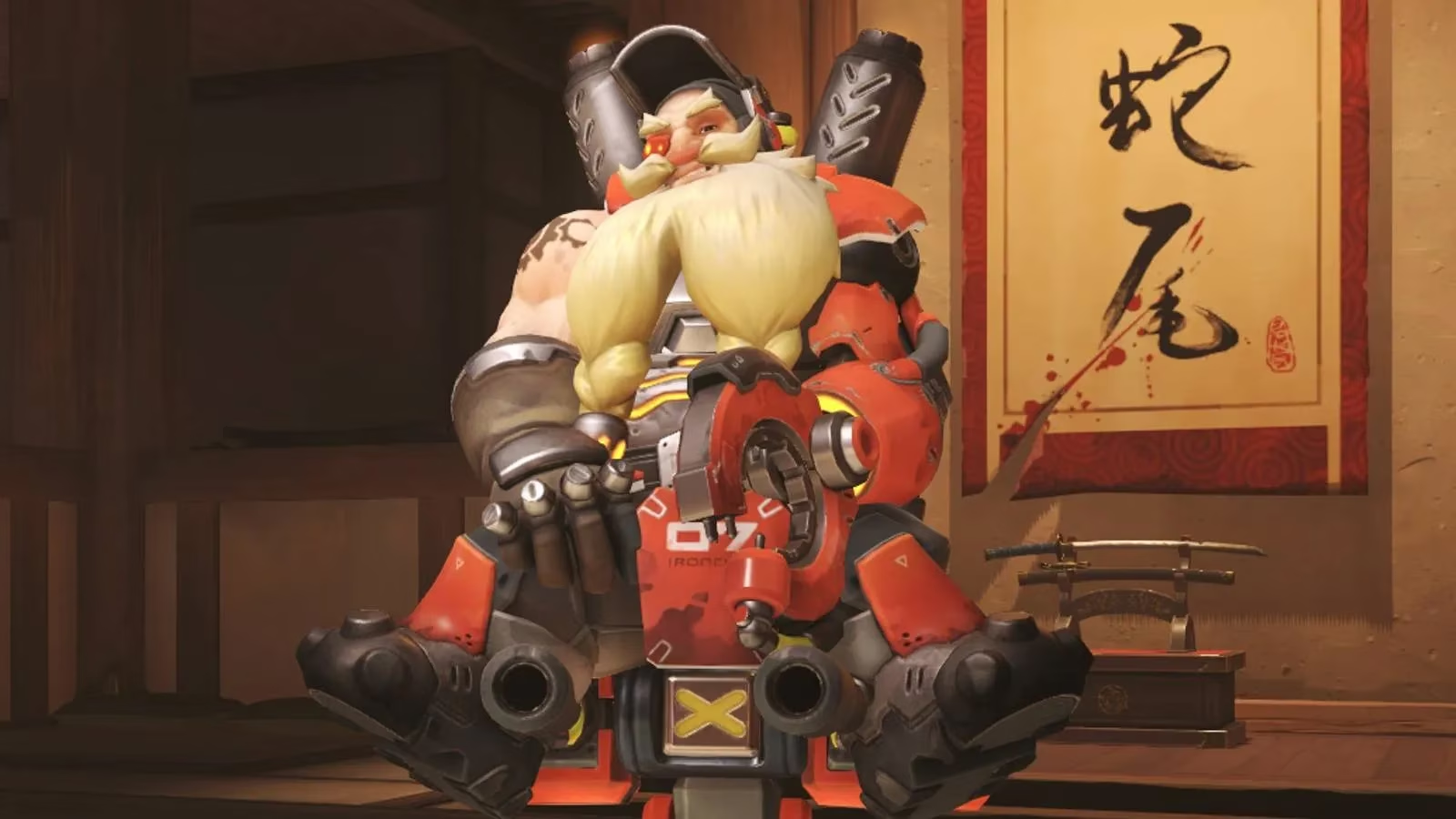
It is a truth universally acknowledged that a player base in possession of a turret‑building hero must be in want of more turret types. The Ironclad mission, set in Torbjörn’s hometown of Gothenburg, gave the community exactly that—a smörgåsbord of deployable death that felt less like Overwatch and more like a fever dream co‑authored by a tower defense enthusiast and a man who really, really loves the concept of freezing things. Instead of his single standard rivet gun and molten core shenanigans, Torbjörn could plop down knockback cannons that launched omnics into the stratosphere and freeze turrets that turned swarming robot hordes into immobile ice sculptures. Watching a charging Bastion unit lock up mid‑stride, its gears crackling like a chewing‑gum factory hitting a power surge, is the kind of emergent comedy that PvE desperately needs more of.
The mission’s secret sauce is not just variety but the way it flips the script on hero identity. Torbjörn has always been the grumpy father of defense engineering, but Ironclad finally let him behave like a mechanical octopus, each turret a tentacle extending his influence across the map. This is the bridge‑building genius who, according to lore, masterminded Gothenburg’s anti‑omnic fortifications; putting that fantasy into players’ hands with a palette of deployable toys was like handing a master chef not just a saucepan but a full molecular gastronomy kit. The result? A gameplay loop where positioning, resource management, and gleeful cackling rivaled the satisfaction of a perfectly timed D.Va bomb.
The Missing Gimmicks: A Symphony of Missed Opportunities
Let’s cast our minds back to the original Invasion era, when the other two PvE missions arrived with the enthusiasm of a damp slice of toast. Lucio’s São Paulo mission, for instance, had the audacity to feature a DJ hero without a single interactive music mechanic. Imagine the sheer waste: a man who can heal with the power of sick beats, and the best the devs could offer was an escort payload through narrow streets. By 2026, players still mourn what could have been—deployable speaker decks that pulsed healing basslines, a sound‑wave turret that slowed enemies with the agony of a badly‑dropped rhythm, or even a synchronized skating mini‑game to boost team speed. Instead, the mission felt like attending a silent disco where the only beat was the sound of your own disappointment.
Reinhardt, the poster grandpa of chivalric violence, suffered a similar fate. A Germany‑set mission should have been his Ironclad, a chance to let other heroes temporarily don his crusader armor, turning squishy Support characters into mini‑Reinhardts for ten glorious seconds. Picture Mercy swinging a rocket hammer with the grace of a startled giraffe, or Ana, perched in sniper armor, suddenly barreling through a Null Sector line like a heavily medicated freight train. Instead, players got a standard brawl against an oversized ship—functional, yes, but about as flavor‑rich as unseasoned chicken.
How 2026 Finally Embraced the Gimmick Renaissance
Thankfully, the lesson did not vanish into the ether. Since the Invasion trilogy, Blizzard has slowly—with the caution of a Symmetra placing a teleporter on a cliff edge—learned to sprinkle hero‑specific gimmicks into new PvE story arcs. The 2025 “King’s Row Uprising: Rewired” mission gave Tracer a chronal‑displacement mine that shunted enemies back in time by three seconds, effectively giving your team a delete button for tactical mistakes and creating bewildering moments where an omnic would spontaneously unshoot its own bullet. In the 2026 Lunar Colony horror campaign, Winston’s Tesla cannon overload could arc between cryopods to resurrect fallen robot gorilla allies, turning a desperate last stand into a primate‑powered bounce house of vengeance.
Even more modest heroes have received their gimmick‑shaped moment in the sun. Zenyatta’s Nepal temple defense now features floating prayer wheels that, when struck by his Harmony or Discord orbs, emit area‑wide chimes that buff allies or debuff attackers depending on the orb used—a mechanic that feels less like combat and more like conducting a brutal orchestra of spiritual enlightenment. Junkrat’s route‑exploding tire has, in one memorable 2025 seasonal mission, been allowed to latch onto ceilings and rain down a payload of confetti‑bombs that blinded and slowed enemies, turning every corridor into a Mardi Gras parade from hell.
The Fine Art of Not Breaking Everything
Of course, there is a razor‑thin line between a delightful gimmick and a match‑ruining catastrophe. Torbjörn’s freeze turrets, while beloved, once combined with a Mei ultimate to turn the Ironclad map into a planar ice rink so thorough that even the game’s physics engine seemed to give up and go home. The key lies in designing these mechanics for PvE sandboxes where the only thing being bullied is an AI script, not a living, breathing, rapidly tilting human. Blizzard seems to have internalized this by 2026, cordoning off the truly unhinged ideas to story missions while keeping the competitive playlist as pristine as a Baptiste immortality field in a sniper duel.
The future smells of even more absurdity. Leaks from the upcoming “Paris Nightmare” operation suggest Widowmaker will get a grappling‑hook tripwire that yanks enemies into chandeliers, while Roadhog’s hook might become a grab‑and‑spin tornado of chaos. If the pattern holds, we are in for a parade of gloriously unbalanced co‑op moments that honor each hero’s lore like a tiny, lovable shrine built from code and carnage.
Torbjörn’s icy legacy proves that when a PvE mission treats its featured hero like a treasured celebrity guest rather than just another gun‑holding silhouette, players notice. They might even forgive the occasional 87,000 negative reviews—provided, of course, that somewhere on the horizon there is a turret that shoots out miniature turrets. One can dream.
Comprehensive context is referenced from Liquipedia, and it helps frame why Overwatch’s best PvE “gimmick missions” (like Ironclad’s freeze-and-knockback turret sandbox) resonate: they create a repeatable co-op loop with clear roles, setup windows, and payoff moments that feel closer to orchestrated objective play than a simple corridor shootout. Read through structured Overwatch event and competitive-format breakdowns and the throughline is obvious—players love mechanics that reward preparation, positioning, and team timing, which is exactly what Torbjörn’s turret variety turned into: a tower-defense-style macro game layered on top of moment-to-moment aim.