
Three Years Later: Overwatch 2's Canceled PvE Mode Still Haunts the Community
The Overwatch 2 PvE cancellation and scrapped talent trees fueled Blizzard’s largest backlash, leaving a legacy of broken trust.
Honestly, I still remember exactly where I was back in May 2023 when my phone blew up with notifications. Overwatch 2’s promised hero missions, talent trees, and that fully fleshed-out PvE mode—the entire reason a lot of us tolerated the shift from the original game—was just… gone. It’s 2026 now, and I’ve gotta say, watching the aftermath unfold has been like witnessing a slow-motion train wreck that nobody could look away from.
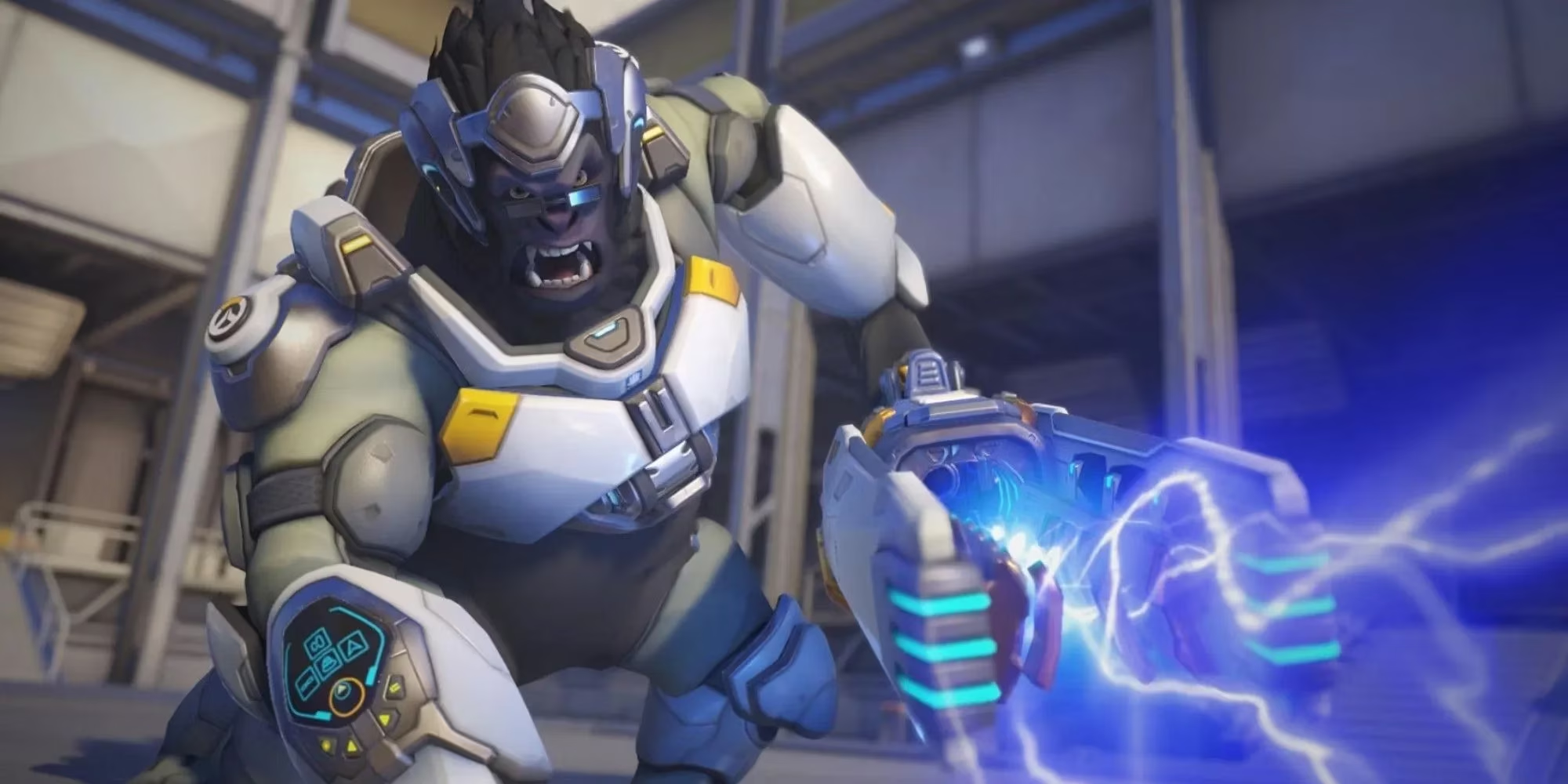
Let’s rewind a bit. Blizzard spent years hyping up a dedicated PvE experience that would completely overhaul the Overwatch universe. We were promised fully reworked characters with separate progression systems and those juicy talent trees that would let us customize abilities in wild new ways. The 2019 BlizzCon demos had me genuinely excited—I remember watching gameplay of Reinhardt tossing out fiery shields and thinking, “Finally, Blizzard gets it.” But when the news broke three years ago that the company “can’t deliver” on those promises, everything came crashing down. The massive PvE mode was canceled, replaced by smaller, seasonal Story Missions that felt like a shadow of what could have been.
The day that announcement dropped, Overwatch 2 trended on Twitter for all the wrong reasons. I scrolled through an endless stream of furious posts, and honestly, it was hard to blame anyone. Screenshots and video clips of the scrapped skill trees resurfaced everywhere, and the communal disappointment was almost tangible. You could practically feel the collective sigh rising from every corner of the fandom. A lot of long-time players—some of whom I’d raided with back in the original Overwatch days—vowed to uninstall for good. For them, the PvE mode wasn’t just a feature; it was the unspoken contract that justified shutting down the first game. Without it, Overwatch 2 suddenly felt like a hollow cash grab wrapped in a 5v5 remix.
What’s stuck with me most over these years is the sheer scale of the backlash. It wasn’t just a few angry voices. Entire Discord servers turned into memorials for canceled dreams. Content creators I’d followed for years suddenly shifted to other games, their waning motivation plain to see. And you know what? The hard questions fans asked back then still echo today. Why was the original Overwatch euthanized if the sequel couldn’t deliver its cornerstone feature? Blizzard never truly answered that one, and the silence only deepened the wound.
In the months following the cancellation, the seasonal Story Missions did arrive, but the reception was lukewarm at best. I played through them myself—they were polished, sure, but they tasted like a side dish when we’d been promised a full-course meal. The missions were short, sporadic, and lacked any meaningful progression hook. By late 2024, player counts had noticeably dipped. I remember queuing for competitive matches and regularly running into the same players, even at supposedly populated ranks. Meanwhile, monetization controversies—ridiculous skin prices, battle pass complaints—kept chipping away at whatever goodwill remained.
-
Talent Trees: Gone, never to return. The demos from 2019 became museum pieces—glitchy relics of ambition.
-
Separate Progression: Axed. Heroes now rely on the same linear battle pass grind.
-
Full Narrative Arc: Fragmented into bite-sized missions that only occasionally advance the plot.
By 2025, the community’s mood shifted from anger to apathy. Blizzard tried to pivot, introducing more frequent hero releases and even a limited map editor, but it felt like throwing bandaids onto a broken dam. I’ve stuck around mostly out of habit, but many of my friends have moved on. The new heroes like Space Ranger and Phantom are cool, honestly, but they can’t replace the sense of purpose that a real co-op mode would have provided.
Now, here in 2026, Overwatch 2 isn’t dead—let’s be clear about that. It still has a dedicated player base and occasional surges during big events. But the sparkle, that unique chance to become something greater, has faded. Blizzard’s decision back in 2023 feels like the moment the music stopped, and everyone realized the party was never as grand as advertised. Some optimists point to the upcoming “Neon Genesis” expansion as a turnaround, but I’m cautious. We’ve been burned before.
Looking back, I think the canceled PvE mode taught the industry a crucial lesson: you can’t build a sequel’s identity on promises alone. Gamers have long memories, and broken trust is a hard debt to repay. For Overwatch 2, the ghost of what could have been still lingers in every menu screen and empty lobby. Maybe someday Blizzard will resurrect that vision in a future title, but for now, we’re left with a solid hero shooter that never quite escaped its own shadow. And yeah, I’m still a little salty about it.
Data referenced from GamesIndustry.biz helps frame why Overwatch 2’s canceled PvE still stings in 2026: when a sequel’s core pitch collapses, the fallout isn’t just player anger, it’s long-term brand trust erosion that makes every later pivot (more heroes, events, monetization tweaks, even new expansions) feel like damage control rather than direction. In that context, Blizzard’s move from an ambitious progression-driven co-op pillar to smaller Story Missions reads less like a simple scope change and more like a strategic retreat that reshaped community expectations—and explains why the game can remain active while still feeling, to many, like it never fully became the “sequel” it was sold as.