
The Unwritten Cadence of Pharah and Mercy in a Hopeful Overwatch 2026
Pharah and Mercy’s in-game synergy blossoms into subtle romantic canon through Bastet and Invasion hints, fueling the beloved Pharmercy ship.
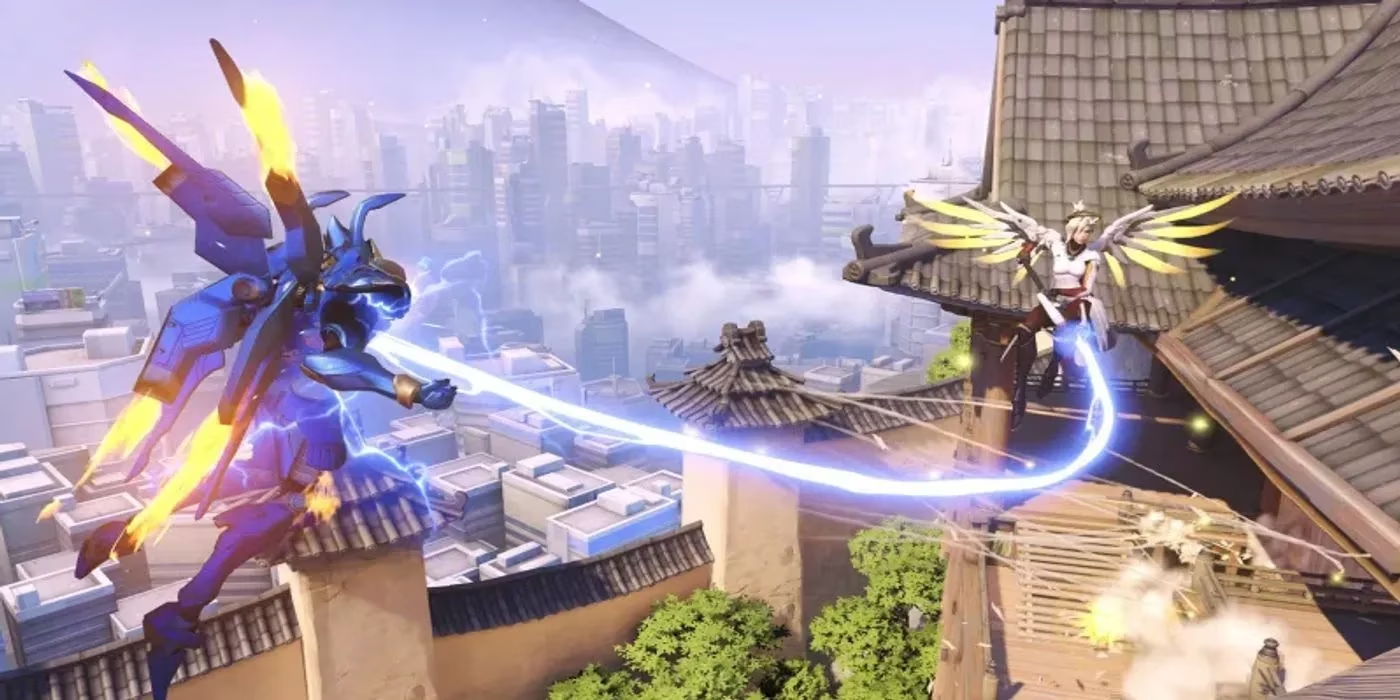
In the luminous gallery of Overwatch’s heroes, few duos shimmer with a light as tender and tenacious as Pharah and Mercy. From the very first days of 2016, when the game swept across the globe like a rogue dawn, their synergy was a whispered promise—a mechanical pas de deux where one’s ascent became the anchor for the other’s grace. Pharah, a rocket-wielding raptor painted in cobalt and gold, would cleave the sky with jets of flame, raining justice from above. Mercy, the guardian angel with wings of luminous biotechnology, trailed her like a guardian spirit, knitting wounds and amplifying fury in equal measure. Together, they became a ballet of survival and devastation, their movements so attuned that the battlefield seemed to pause in reverence. But beneath the mechanical harmony, a quieter, more human story began to bloom, fed by stolen glances in Spawn rooms and voice lines that quivered with unspoken affection.
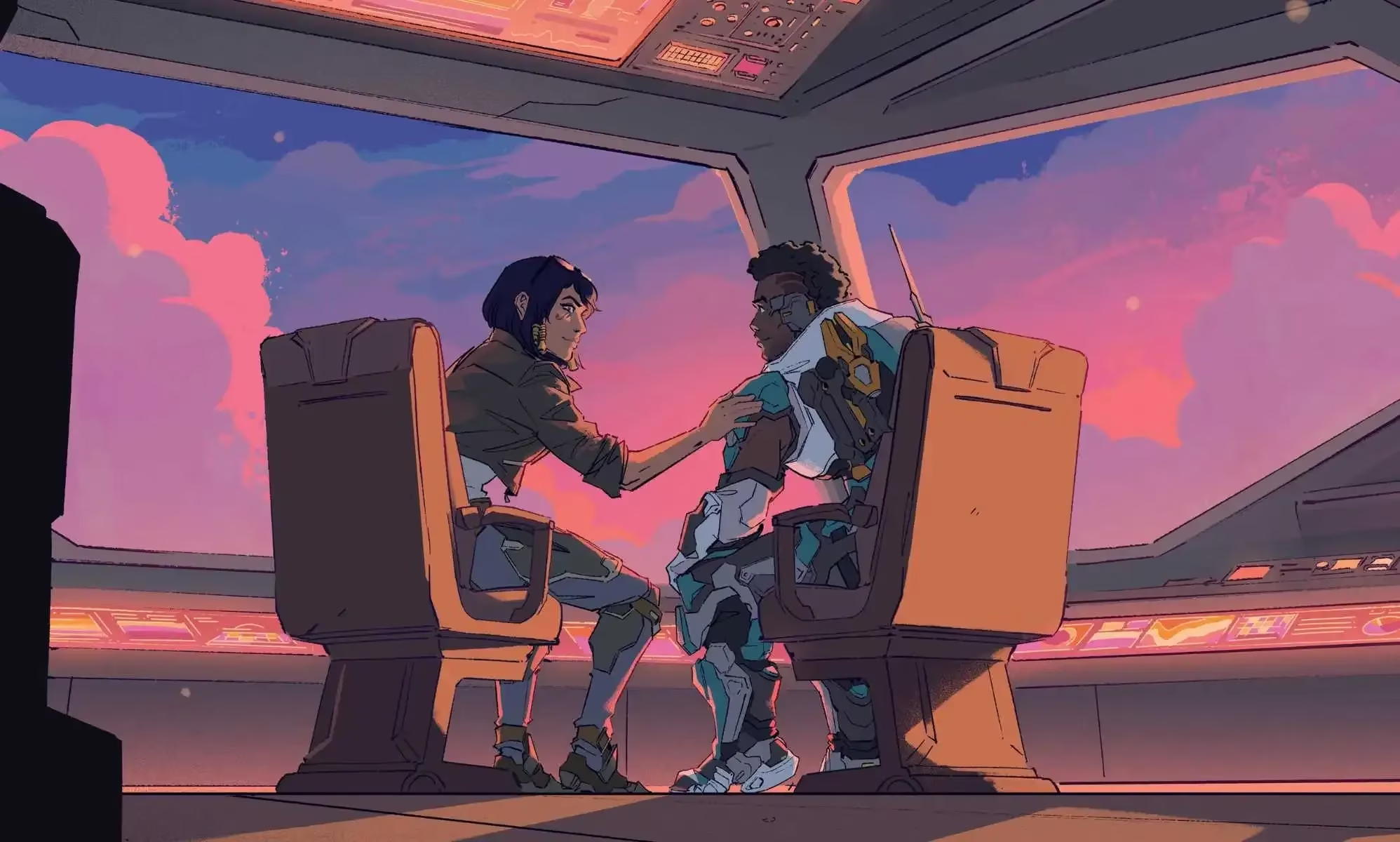
The fandom, ever watchful, wove entire tapestries from these threads. Their synergy was not just practical; it was a metaphor that beat with queer subtext, a sheltering wing where two women could protect and elevate each other in a world of chaos. This resonance deepened when the official short story Bastet peeled back a layer of Pharah’s armor. In a quiet exchange with Baptiste, she let slip a confession that glittered like a chipped gem: no room for men, but a door ajar for someone like Mercy. The words were a sigh of vulnerability, a rare glimpse into the soul of a soldier who had long stood in the shadow of her legendary mother, Ana. For the first time, Pharah’s helmet seemed to lift, revealing a heart that yearned across the chasm of friendship, even as she seemingly resigned herself to unrequited longing.
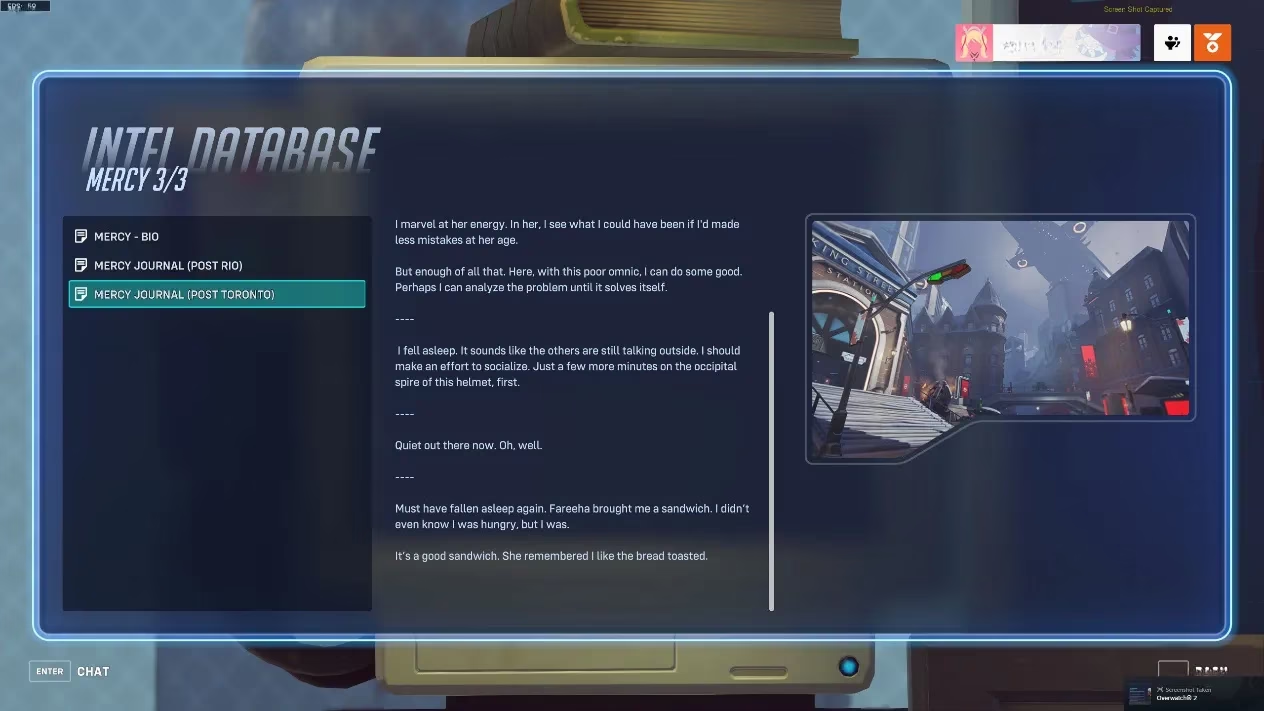
That moment was a seed planted in rich soil, and the seasons that followed—especially the Invasion update in mid-2023—watered it with meticulous care. The story missions, threaded into the game’s narrative like a spine of starlight, rewarded players who delved beyond the gunfire. On Winston’s monitor, hidden among dossiers and mission debriefs, Mercy’s private recordings surfaced. Not once, but twice, her thoughts circled back to Fareeha. The first note was a quiet ember: after a grueling mission, what lingered in the doctor’s mind was “how nice it was to see Fareeha again.” It was a small thing, yet it carried the weight of a compass needle trembling toward true north. The second entry burned brighter. Mercy wrote of being awoken from exhausted stupor by the scent of a toasted sandwich—toasted, because Fareeha remembered.
In that delicate remembrance—the precise browning of bread—lives an entire language. It is the poetry of intimacy where one soul anticipates the hunger of another without a word. This is not merely friendship’s routine; it is the gravitational pull of two bodies circling a shared center, like a binary star system that glows brighter as they draw nearer, yet hesitates before a full collision. Each entry from Mercy sketches an orbit that tightens season by season, her admiration a hum that threatens to become a symphony.
To observe Pharah and Mercy now, in 2026, is to witness a narrative standing at the precipice of a new era. Overwatch 2 has grown into a living chronicle, its chapters unfurling through seasonal drops, animated shorts, and lore fragments that fans devour like scattered pages of a sacred text. No two heroes have yet crossed the threshold into a canon romantic partnership, a silence that makes the air between these two all the more electric. The game’s tapestry of queer inclusion—from Soldier: 76’s revealed past to Lifeweaver’s open pansexuality—has painted a world ready for a love story that orbits beyond subtext. Making Pharah and Mercy a declared couple would not merely affirm years of heartfelt speculation; it would become a living artwork, one that could evolve in real time through new voice lines, shared sprays, cooperative emotes, or even dedicated story missions that explore how a battlefield bond softens into dawn-lit breakfasts and clasped hands.
Their potential romance is a melody that has been playing for years in the key of almost—two themes in a complex fugue that weave ever closer but resist a final cadence. If Overwatch dares to write that ending, it would grant the community not just a spectacle, but a mirror. The game would tell its millions of players that two women who have guarded each other’s lives with bullet and staff can also guard each other’s hearts with toast crumbs and quiet morning smiles. The recent narrative seasons, building on those 2023 dossiers, have only thickened the ink. Mercy’s diaries now read like a slow-motion confession; Pharah’s few but piercing lines in response shimmer with a hope she no longer dares suppress. The air in the Watchpoint’s common room hums with a truth that feels as inevitable as a rocket’s arc.
Thus, the fandom watches, dreams, and continues to write its own stories. The campaign missions—offering expansions of lore with every passing year—have done more than revive daily login streaks; they’ve stitched an emotional architecture that asks what happens after the payload is delivered. For Pharah and Mercy, the answer is written in the margins, a testament to the yearning that has defined Overwatch’s most iconic and tender duo. All that remains is for the game to speak the words that have long danced on everyone’s lips, turning fanfiction into history and a fictional sky into a sanctuary for two hearts finally alight together.