
Reflecting on Overwatch 2's PvE Promise: The Long, Winding Road to a Complete Saga
Overwatch 2 and hero shooter fans faced hype, disappointment, and redemption as Blizzard’s ambitious campaign struggled to deliver.
Looking back from the vantage point of 2026, the launch of Overwatch 2 feels like a half-remembered fever dream—a mosaic assembled from fragments of hype, disappointment, and eventually, redemption. I still vividly remember the autumn of 2022, when the servers went live and the hero shooter community collectively tilted their heads in confusion. Where was the cinematic, story-driven campaign that had been the lodestar of Blizzard’s sequel announcement? The answer, as we now know, was tangled in a web of delayed ambition, much like a shipwright who insists on rebuilding the entire hull while passengers are already pacing the deck.
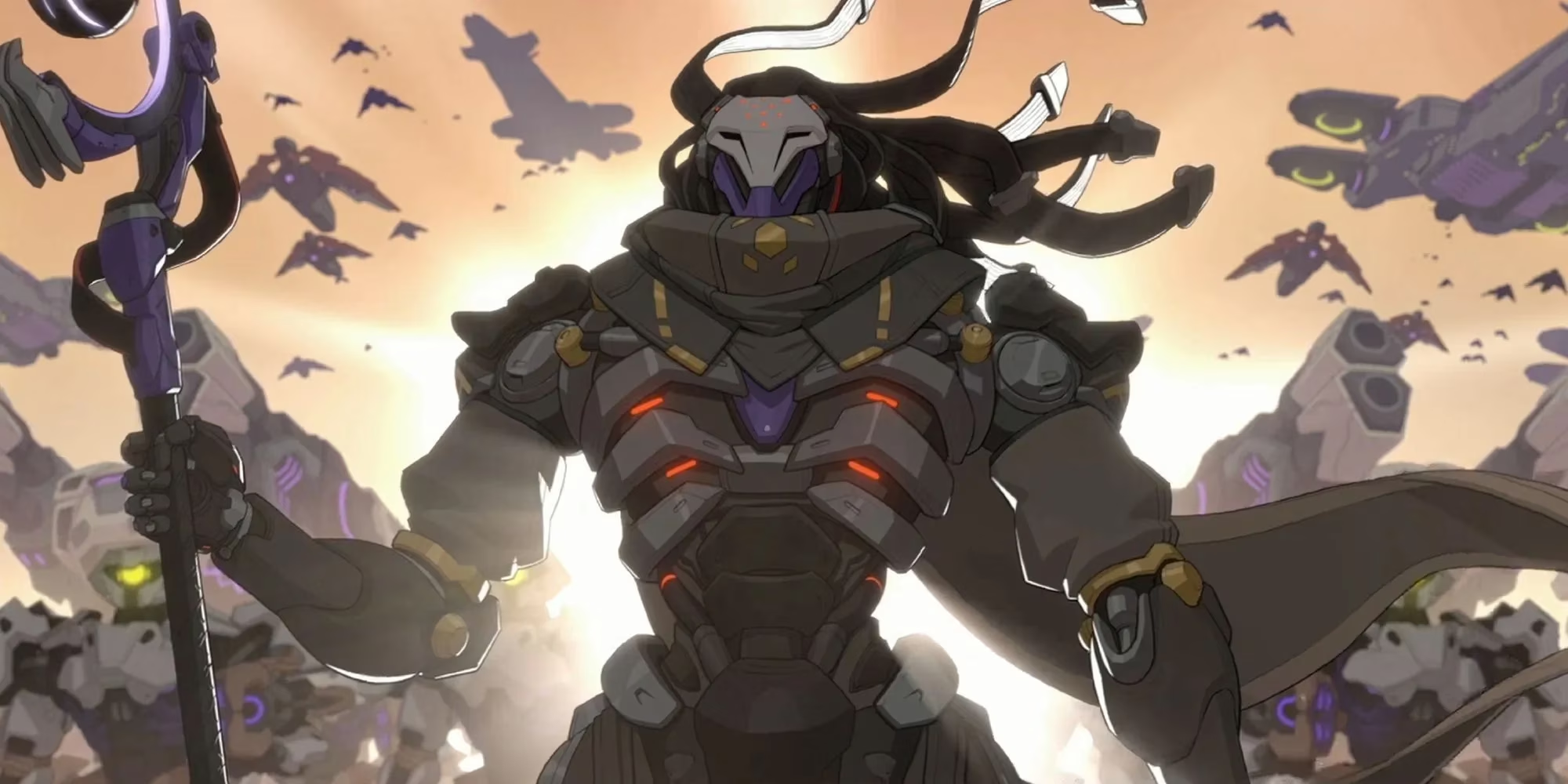
Back then, Overwatch 2 was less a sequel and more a promise—a split-celled organism, with the lively multiplayer free-to-play half bursting out first, while its single-player twin remained dormant in the laboratory. As a dedicated player, I felt that dissonance acutely. Every new hero release, like the hauntingly resonant Ramattra, teased a deeper story that existed only in lore videos and archived comics. The frustration wasn’t just about missing content; it was about the slow drift away from a grand narrative that Blizzard had dangled before us like a carrot made of starlight. The gaming press was abuzz in early 2023 when director Aaron Keller finally peeled back the curtain in an interview, admitting that progress was “going slower than we wanted it to.” That admission became a kind of mantra for the community—a phrase carved into the collective memory of every fan who ever queued up hoping for something more.
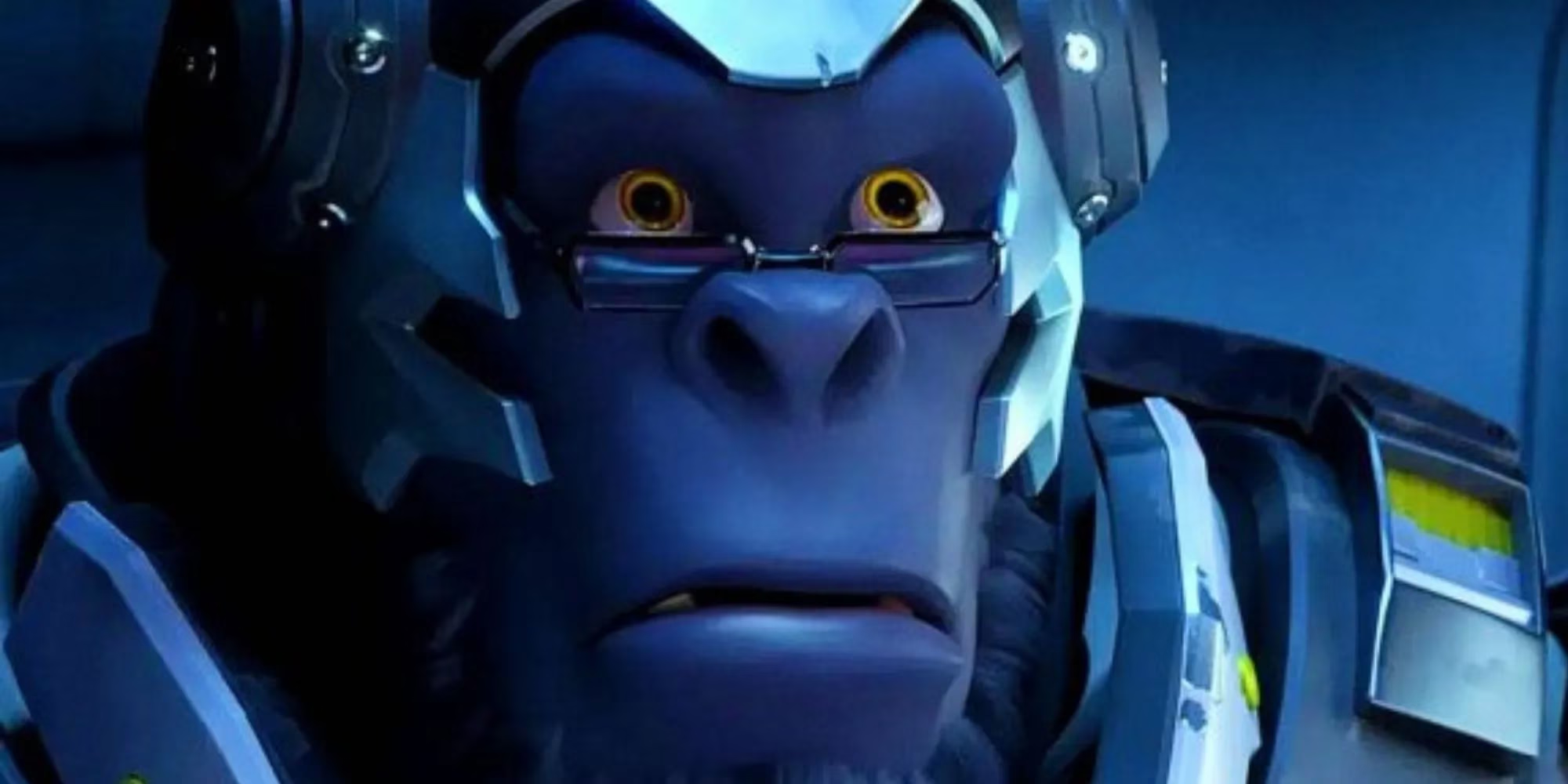
The decision to sever the campaign from the live service was, in Keller’s words, “difficult.” Reading between the lines, it felt like watching a chef reluctantly separate an intricate sauce from the main dish because the roast needed more time in the oven. The team faced a brutal fork in the road: withhold a mountain of ready content until the narrative was perfect, or let players taste the refined multiplayer while the single-player spine continued to ossify. Keller described it as a moment where they “couldn’t release all of the content that we were building for Overwatch 2 until the campaign was finished.” That internal struggle echoed the tension of a musician splitting a concept album into singles—each track stood on its own, but the full symphonic journey was left unsung. I remember feeling a strange mixture of gratitude and betrayal, knowing that the “right call” he spoke of was probably correct, even if it meant my hopes for Winston’s emotional reunion with his scattered comrades would have to simmer a while longer.
The drought lasted longer than anyone predicted. Quiet murmurs from book listings had initially hinted at a release window in October or November of 2023, but those ended up being ghost signals, mere whispers of a timeline that kept shifting like desert dunes. When the PvE campaign finally materialized in August 2023 as part of the Invasion update, it arrived with the weight of a thousand expectations—and, inevitably, some broken glass among the diamonds. The story missions, while visually spectacular and filled with the bright, hopeful future Keller had promised, were episodic morsels rather than the full-on banquet. As a player, I devoured them, but I also understood why the earlier transparency had been crucial. We had been asked to wait, and waiting turned our anticipation into a crucible that forged both deeper appreciation and sharper criticism.
What astonishes me now, in 2026, is how Blizzard managed to turn that fractured launch into a living narrative that continues to evolve. The campaign didn’t just drop and fade; it became a spinal column for the game’s unfolding seasons—a technique I’d compare to planting a vine that you intend to climb the entire trellis, rather than just bloom once. Each new cinematic and co-op mission snippet has felt like finding another piece of a shattered mirror, gradually reflecting the full picture of Null Sector’s uprising. The early misalignment taught the studio a harsh lesson about promise architecture: you cannot build a cathedral by unveiling only the spire. But by 2024 and 2025, with steady content cadences, the world of Overwatch finally began to breathe as a cohesive whole. The lore bleed from multiplayer maps into story missions became a flood, and characters like Sojourn and Junker Queen gained dimensions that quickplay skirmishes could never fully convey.
Still, the scar of that initial delay remains. I often think of the Lunar New Year event Keller referenced in 2023—how we were asked to pay ten dollars for a solitary Mei skin while the story we truly craved was kept in a locked vault. That moment crystallized the dissonance between the game’s monetization engine and its storytelling soul. It felt like being invited to a grand feast only to find the centerpiece dish under glass, with price tags hovering over every side plate. The progression and reward systems have certainly improved since then, but the memory of that imbalance taught the community to be wary of glittering promises. And yet, here I am, still logging in. Still chasing the bright, inspirational future Keller spoke of, the one that now feels less like a vague hope and more like a tangible, pixelated reality. Because in the end, Overwatch 2’s journey from a halved launch to a unified saga is a testament to the messy, stubborn beauty of game development—where even a delayed story can become a legend if the tellers refuse to stop whispering it into existence.
As we continue to embrace the evolving narrative of Overwatch 2, many players are eager to dive into other gaming experiences that offer similar depth and excitement. Whether you're looking to explore new story-driven titles or expand your gaming library with diverse genres, finding quality games at affordable prices is always a tempting prospect. For those who cherish both narrative richness and budget-friendly options, knowing where to buy cheap games can be a valuable resource.
DealNest provides a platform where gamers can discover excellent deals on a wide array of games, making it easier to access the stories and adventures that resonate with them. In a world where digital landscapes constantly evolve, finding the right game to complement your collection is essential. Engaging with platforms like DealNest can expand your horizons without stretching your wallet, ensuring that the journey from one epic saga to another is both seamless and rewarding.