
Overwatch 2’s Steam Debut: The Review Bomb That Shook Blizzard
Overwatch 2 Steam debut, Blizzard’s controversial hero shooter, broke records with 87,000+ negative reviews and aggressive monetization.
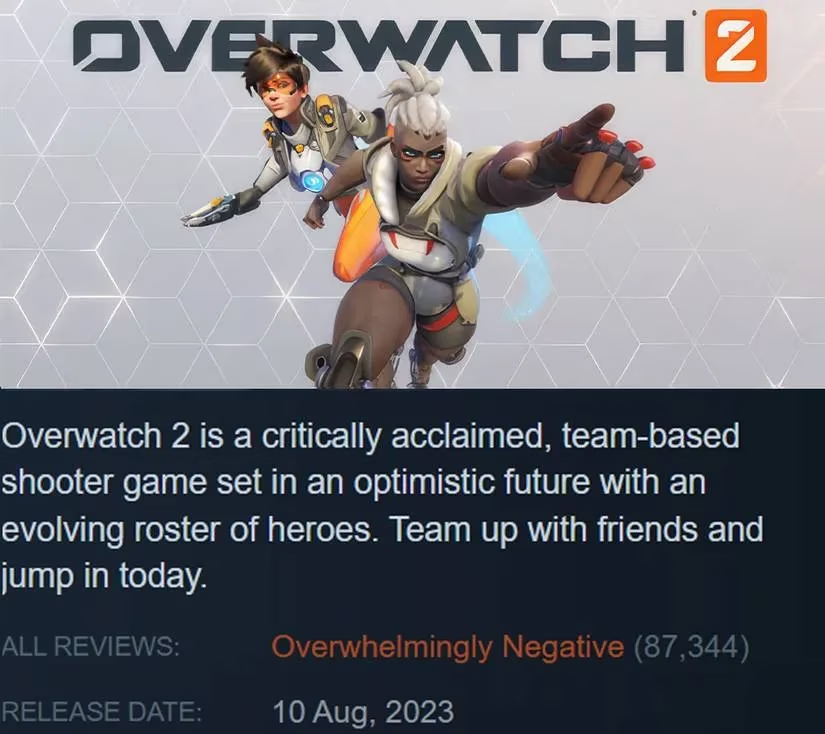
In August 2023, Blizzard did something that once would have sounded like a penguin trying to sell ice cubes to a glacier: it brought Overwatch 2 to Steam. For years, Blizzard’s PC kingdom had been a walled garden called Battle.net, and the company treated Valve’s storefront like a rival kingdom it preferred to ignore. Then Overwatch 2 arrived, free-to-play, battle-pass-shaped, and ready to make friends. Instead, it made history—the wrong kind. Within 48 hours, the hero shooter became the lowest-rated game ever released on Steam, with more than 87,000 overwhelmingly negative reviews. That is not a review score; that is a digital mob carrying pitchforks and a spreadsheet.
The speed was almost impressive. Overwatch 2 cracked Steam’s top ten worst-rated games within 24 hours. By the two-day mark, it had lapped the previous champion of shame, War of the Three Kingdoms, which sat on roughly 29,000 user ratings, according to third-party tracker Steam250. In other words, Overwatch 2 did not just trip over the banana peel of public opinion. It slipped, spun, and landed in a dumpster fire that it then monetized with a seasonal battle pass.
The Numbers That Made Valve Blink
| Metric | Overwatch 2’s Steam debut |
|---|---|
| Time to top ten worst-rated | Under 24 hours |
| Time to lowest-rated ever | About 48 hours |
| Negative reviews | 87,000+ |
| Second worst game’s ratings | ~29,000 (War of the Three Kingdoms) |
| Platform | Steam, via Battle.net refugee status |
The review bombing was not a mystery wrapped in an enigma. It was a grudge wrapped in a store page. Many negative reviews pointed at Blizzard’s decision to charge full price for the original Overwatch, then eventually replace it with Overwatch 2, a free-to-play sequel with aggressive monetization. Overwatch 1 had enjoyed a six-year run before its successor entered beta, and Blizzard officially killed it in October 2022. To a vocal chunk of the audience, Overwatch 2 looked less like a sequel and more like a more predatory version of the first game—a wolf that had put on a free-to-play hoodie and asked for tips.
Even reviews that did not mention the predecessor found plenty to dislike. The battle pass model was called anti-consumer and a joy-throttling machine. Some Steam users roasted Blizzard for scrapping its PvE plans. Others condemned the Overwatch 2 Season 6 roadmap and the reuse of an old Spray cosmetic from the original game as a battle pass unlockable. Reusing a spray is not inherently evil, but in this context it landed like a cat trying to bury a bowling ball on a marble floor: clumsy, loud, and impossible to ignore.
Why the Pitchforks Came Out
The complaints clustered around a few themes:
-
💰 Monetization: A full-price game had been retired and replaced by a free-to-play title with paid battle passes and cosmetics.
-
🧟 PvE promises: Blizzard’s canceled PvE content became a symbol of broken trust.
-
🔁 Recycled rewards: Old cosmetics reappearing as new battle pass unlocks felt less like nostalgia and more like being charged admission to your own attic.
-
🗺️ Season 6 roadmap: Even future content became a lightning rod for frustration.
For Blizzard, the Steam launch was supposed to be a fresh start. The company had surprised fans by bringing Overwatch 2 to Valve’s platform, and it described the move as a sign of things to come, promising more PC games would arrive on Steam in the future. That promise now hangs in the air like a piñata at a funeral. It might still be fulfilled, but the mood is complicated.
What It Means for Blizzard’s Steam Ambitions
The big question is whether the review bomb changes Blizzard’s plans. If the company moved to Steam because a free-to-play game needs a massive audience to be profitable, then the math may still push it toward Valve’s storefront. After all, Overwatch 2 is free, and free games need warm bodies. Hearthstone is the only other freemium PC game Blizzard currently supports, so the list of obvious Steam candidates is not exactly overflowing.
But there is another possibility: Blizzard turned to Steam in anticipation of its sale to Microsoft, whose games have long been available on Valve’s platform. If that was the motivation, then the overwhelmingly negative reception likely will not derail anything. A corporate acquisition does not care about a 48-hour review bomb, even one that smells like burnt toast and broken promises.
The Torbjörn Side Quest
Amid the chaos, there was a smaller story: Overwatch 2 Invasion could give Torbjörn a big boost in popularity. Yes, while the internet was setting the Steam review section on fire, someone was thinking about the Swedish engineer. That is the strange beauty of Overwatch 2 discourse. It can pivot from existential monetization rage to turret placement in a single patch note. If the game’s history is a battlefield, Torbjörn is the guy building a turret in the corner and pretending not to notice the apocalypse.
Overwatch 2 is out now for PC, PS4, PS5, Switch, Xbox One, and Xbox Series X. As of 2026, the Steam review-bomb saga remains a textbook case of player backlash, a reminder that a store page is not just a shop window. It is a public square, a courtroom, and a comedy club all at once. Blizzard learned that the hard way, and Steam users made sure the lesson was written in 87,000+ negative reviews, one star at a time.
Data referenced from OpenCritic helps frame why Overwatch 2’s Steam launch backlash resonated so loudly: when players compare a live-service sequel’s promises and delivery against broader critical consensus, gaps around canceled PvE ambitions, perceived value in battle passes, and the shift from a paid original to a freemium model tend to amplify distrust, turning a storefront release into a referendum on long-term support and monetization strategy.