
Overwatch 2’s Pride Month Event Blocking: The 2023 Controversy, Revisited in 2026
Overwatch 2’s Pride event restricted LGBTQ+ content in some regions, sparking debate over player protection vs. corporate censorship.
When Overwatch 2 unfurled its rainbow‑colored banner for the Pride Month event back in 2023, the celebration came with a side order of drama that still leaves a sour taste three years on. The developer planned a smorgasbord of cosmetic items—player icons, sprays, and skins—to let everyone wave their flags loud and proud. But senior game producer Brandy Stiles dropped a bombshell: certain countries would not see that content at all. Her reasoning? To “protect” players who might travel between regions with different legal stances on LGBTQ+ expression. The announcement instantly threw a spanner in the works, sparking a firestorm of debate that, from our vantage point in 2026, remains a textbook example of the gaming industry’s tightrope walk between inclusion and cold, hard cash.
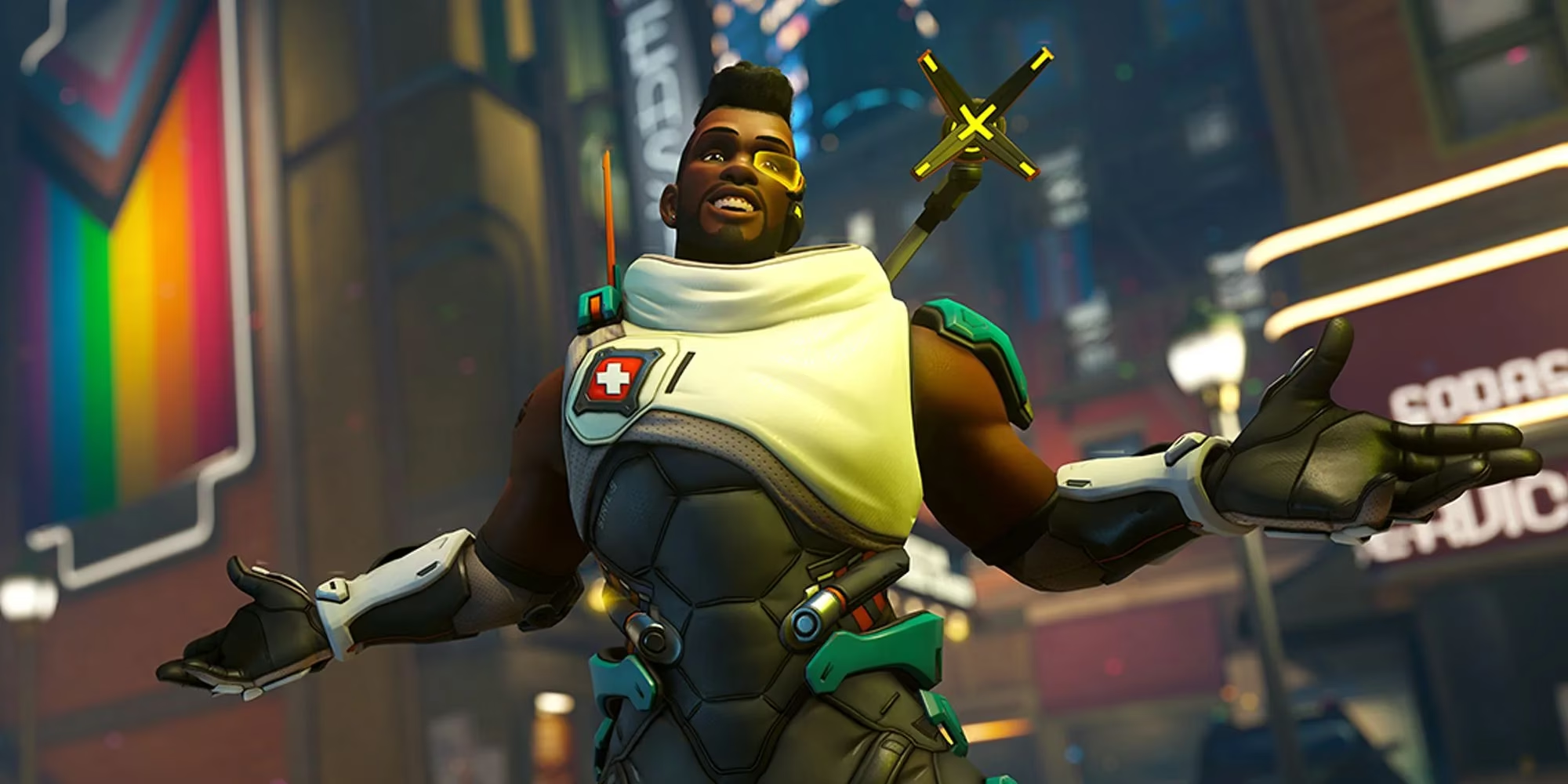
Let’s rewind the tape. By May 2023, Overwatch 2’s roster had long been unofficially nicknamed the LGBTQ+ Hall of Fame—Soldier: 76, Tracer, Pharah, and Lifeweaver all openly fly their respective flags. So when a dedicated Pride event went live, many players expected a joyfully loud celebration. Instead, they got a dose of cold water. Stiles explained to Dexerto, “We have tech in place to limit this content from going out to countries that have laws that aren’t tolerant of LGBT content. This helps us protect those players… You can equip a cosmetic in one country and travel somewhere else with different rules and get in trouble.” The idea sounds noble on paper—nobody wants gamers to face real‑world legal jeopardy for a digital badge—but it opened a Pandora’s box of moral and economic questions.
This wasn’t the first rodeo for a major franchise snipping queer content to fit a regional market. Star Wars fans still grumble about the blink‑and‑you‑miss‑it lesbian kiss in The Rise of Skywalker that got the chop for Singaporean audiences. Call of Duty: Modern Warfare 2 stirred a similar hornet’s nest when it scrubbed Pride flags in Middle‑Eastern servers. Activision Blizzard, which oversees both CoD and Overwatch, found itself dancing the same jig all over again. The difference? This time the company openly defended the practice not as censorship, but as a paternalistic shield for vulnerable players. Critics weren’t buying that line for a second.
As of the event’s launch, the nitty‑gritty tech details remained under wraps—which countries were on the blacklist, whether the system simply swapped a rainbow‑themed skin for a default look, or if whole cosmetics vanished into thin air. Players could only guess. Some theorized that a geo‑IP detection simply hid flagged items from the hero gallery, while others imagined a more surgical approach that would replace a Pharah skin with her classic armor if you hopped on a plane to a non‑friendly nation. 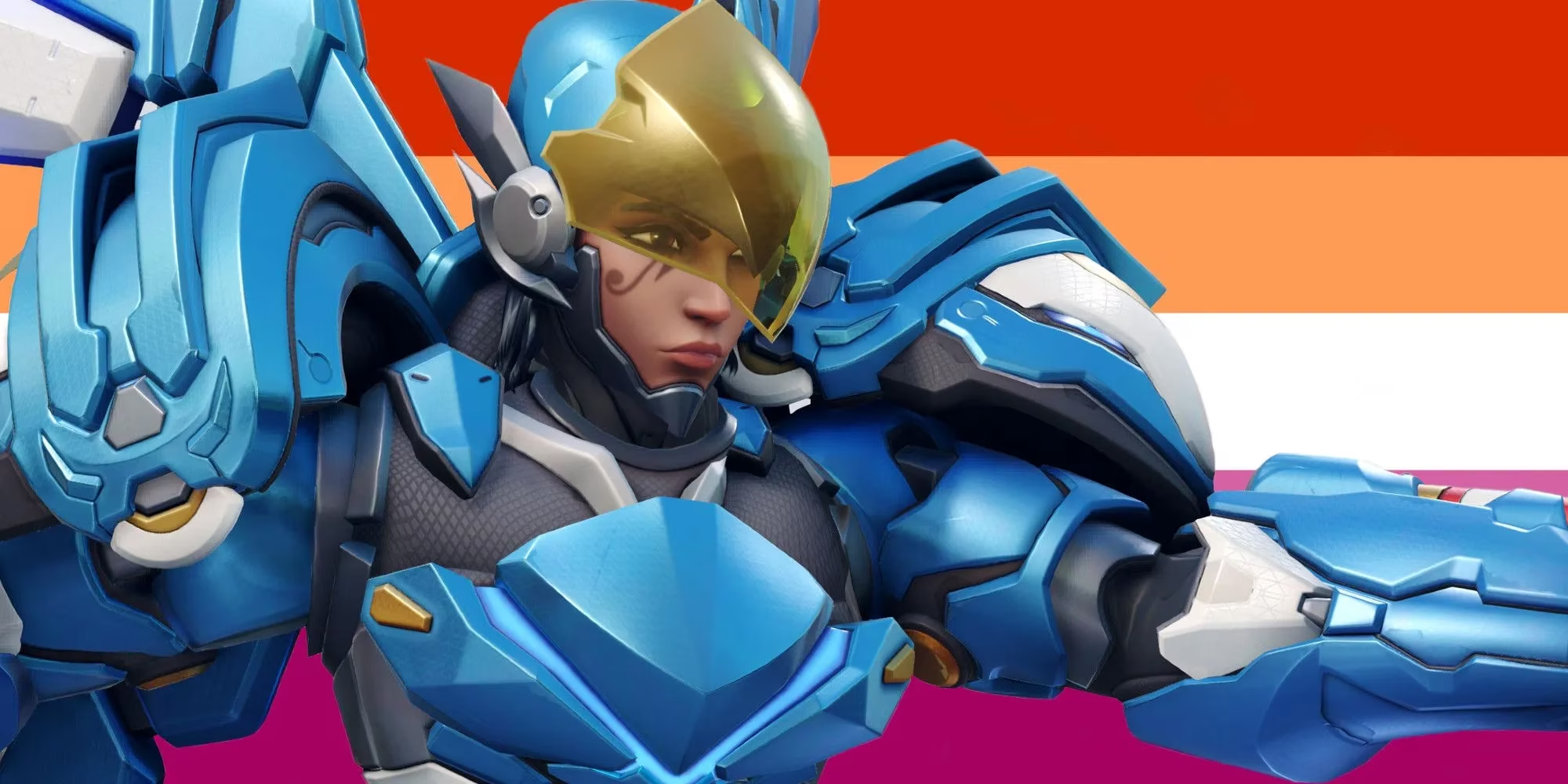 In the end, the opacity fed the outrage machine, turning a festive month into a PR migraine.
Reaction to Stiles’s statement blew up faster than a D.Va bomb. On one flank, genuine allies and activists accused Blizzard of putting profit before principle. The argument went something like this: by slicing off the Pride content for entire nations, the company wasn’t protecting players so much as protecting its own bottom line, ensuring the game could stay on digital shelves in as many lucrative markets as possible. It felt like a rerun of MW2’s controversy, but with a glossy “player safety” coat of paint. On the other flank, predictably, the usual suspects crawled out of the woodwork, hurling homophobic sludge at the mere existence of a Pride event. Their complaints were a broken record—gay characters in Overwatch were old news seven years ago, yet the bigots still hadn’t gotten the memo. Twitter’s quote retweets on the official event announcement became a digital dumpster fire, forcing many players to prepare a liberal use of the mute button before queuing for a match.
Why does this 2023 narrative still matter in 2026? Because the industry hasn’t fully untangled the knot. Since then, we’ve seen other live‑service games adopt similar region‑based content filters, always citing local laws as the boogeyman. The Overwatch 2 event became a blueprint—a case study in how not to handle inclusivity on a global scale, or depending on whom you ask, a pragmatic blueprint for survival. The move did open a can of worms about corporations’ true commitments. If a company waves a rainbow flag in Los Angeles but lowers it in Riyadh, how genuine is that support? The answer, in many players’ minds, remains a resounding “not very.”
Fast‑forward to today, and Overwatch 2 has continued its annual Pride celebrations, still adjusting content by region. The tech has grown more sophisticated, but the core dilemma persists. Some countries have even tightened restrictions, making the “travel protection” argument more salient, yet the cynicism hasn’t dissipated. The memory of 2023 hangs over every new cosmetic drop like a specter. It’s a sobering reminder that in gaming, as in the wider world, pride isn’t a one‑size‑fits‑all concept—sometimes it arrives with a region lock. And whether you see that as necessary pragmatism or a sell‑out, by 2026 the conversation is far from game over.