
Overwatch 2’s Cosplay Rule: Why Crossovers Will Never Replace Your Heroes
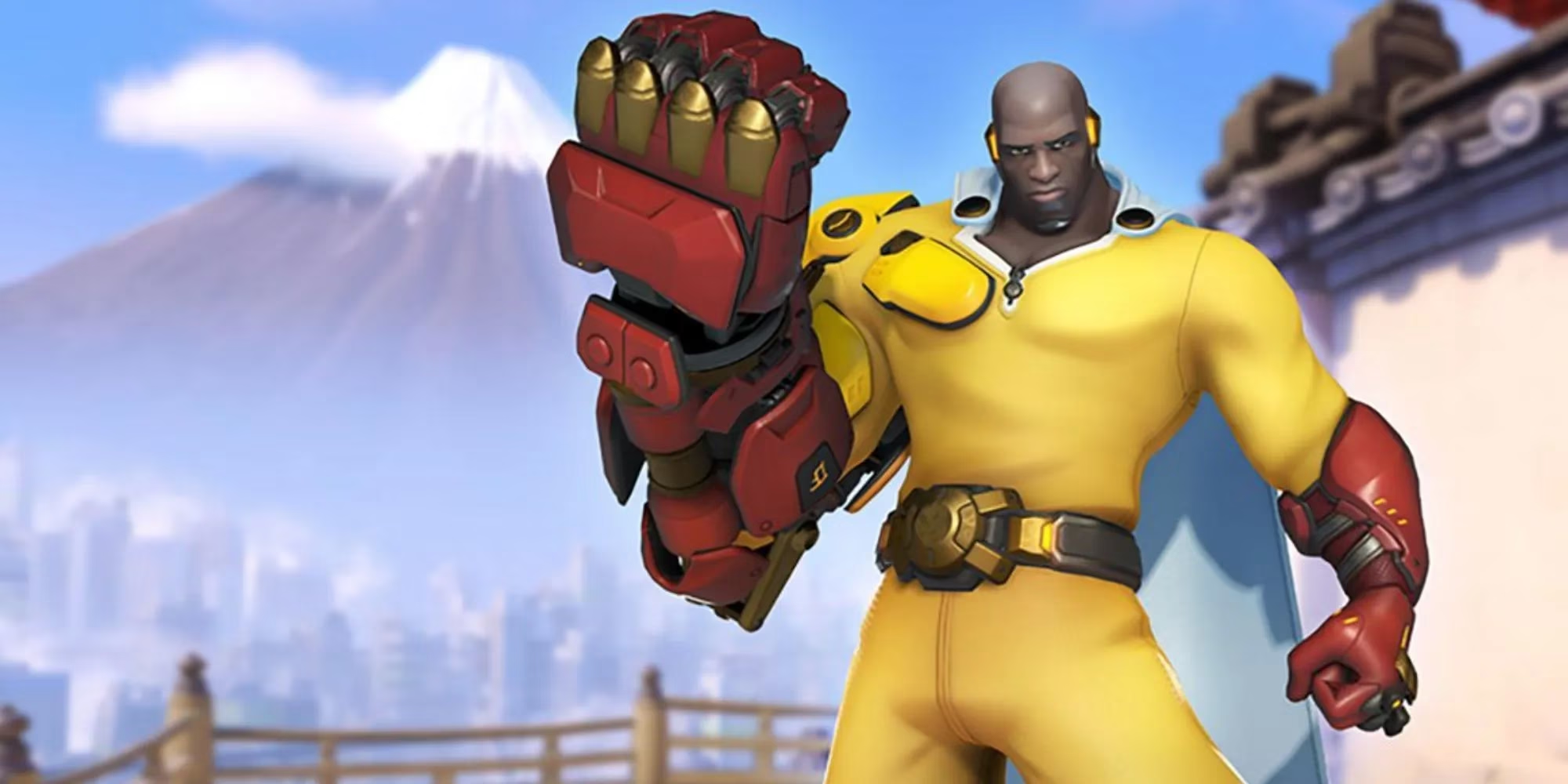
Overwatch 2's One-Punch Man crossover cemented its collaboration mantra: heroes cosplay, retaining their iconic silhouettes.
It’s 2026, and I’ve seen Overwatch 2 evolve from a controversial sequel into a live-service juggernaut that’s unafraid to have a little fun. But if there’s one decision that has defined its collaborative soul, it’s a philosophy laid down all the way back in Season 3 – when a certain bald-headed hero punched his way into the game. I’m talking, of course, about the One-Punch Man event from March 2023, the first-ever full-blown crossover in Overwatch history. That moment didn’t just give us a Doomfist Saitama skin; it set a golden rule that has shaped every external collaboration since: our heroes will cosplay, but they will never be replaced.
Why such a hard line? After all, Fortnite had already turned its island into a pop-culture blender, letting players shoot as Darth Vader, Ariana Grande, and Goku without a second thought. Surely Overwatch 2, a game built on vibrant personalities, could have done the same? I put the question to game director Aaron Keller’s own words from that period, and the answer was as pragmatic as it was protective. In a blog post, Keller explained that a hero’s silhouette, voice, and visual readability are “essential to gameplay.” If you heard a Sombra translocate or spotted a Reinhardt charging from afar, every split-second decision depends on instant recognition. Slapping a completely different character model onto those abilities would create chaos – not the fun kind.
So instead of wholesale transplants, Overwatch 2 opted for a creative middle ground. The One-Punch Man skins were literally costumes. Doomfist still looked like Doomfist, just draped in Saitama’s red cape and gloves, with that iconic power fist getting a yellow makeover. Soldier: 76 got a Mumen Rider skin that you could still identify at a glance as Soldier. The heroes kept their signature proportions, voice lines, and animations. Keller even called it a learning experience, noting the team would “get better at it each time.” At the time, I remember wondering if this was just a safe, boring start. But three years later, I can’t imagine it any other way.
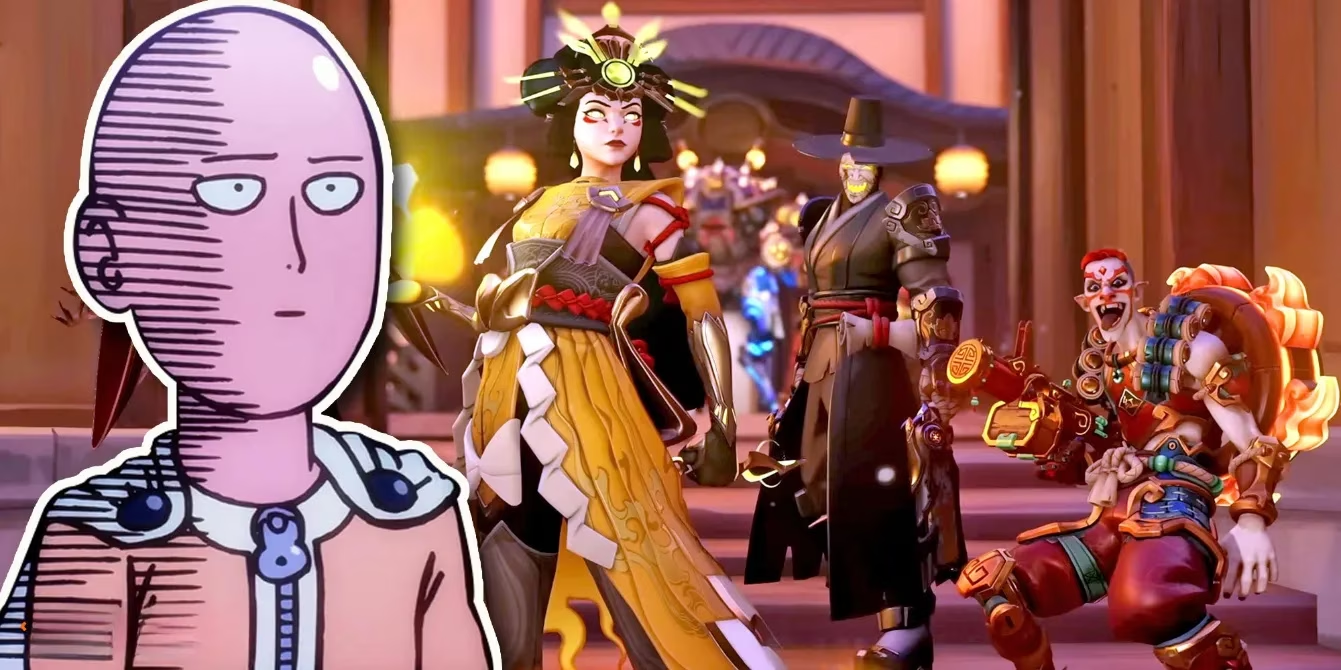
Fast forward to 2026, and Overwatch 2 has welcomed a handful of iconic universes through this cosplay lens. There was the Cyberpunk 2077 collab where Genji donned a Johnny Silverhand vest while still slicing with dragonblade finesse. Then a Dungeons & Dragons event turned Reinhardt into a paladin and Mercy into a cleric – but never obscuring their core outlines. The most recent one, a Chainsaw Man crossover, saw Cassidy adopt Denji’s chainsaw arms… attached to his own prosthetic, naturally. Every time, the design team walks a tightrope between fan service and competitive integrity. And honestly, I find myself asking: has any other hero shooter pulled this off with such consistency?
Think about it. When Apex Legends adds a Final Fantasy skin, does it affect how you read enemy movements? Possibly. But Overwatch 2’s approach protects the new player experience and the esports scene simultaneously. You may see a pink-haired “Tracer” in a Sailor Moon outfit (yes, that happened in 2024), but you still hear that cheeky British accent and see the blink trail. The fantasy is there, but the gameplay is sacred. And yet, sometimes I feel a tiny pang of envy when I watch Fortnite clips of Goku doing the Griddy. Are we missing out on pure, unhinged chaos? The answer might depend on what you value more – a coherent competitive environment or a meme generator.
Keller has since doubled down on this design ethos. In a 2025 developer update, he mentioned that the team has developed an internal “costume integrity checklist” for every crossover pitch. If an IP can’t be adapted to fit an existing hero’s hitbox and movement profile, it’s rejected. That’s why you’ll never see a pint-sized Kiriko wearing a Pikachu onesie – adorable as that might be, the proportions wouldn’t match. Instead, they lean into characters whose builds naturally overlap with Overwatch’s roster. It’s a logistical dance, and the One-Punch Man event was their prototype.
That inaugural event only lasted a month, from March 7 to April 6, 2023, but its legacy is permanent. It proved that collaborations don’t have to sacrifice identity for hype. It also showed that players will engage deeply with limited-time events that respect the source material and the game’s own DNA. I mean, who didn’t want to unleash a “Serious Punch” as Doomfist? The sales figures were never publicly broken down, but the sheer number of Saitama skins I still see in 2026 lobbies tells its own story.
Looking ahead, I’m curious how far they can push the cosplay concept. Could a horror crossover with Dead by Daylight give Reaper a functional but terrifying cosmetic? What about a Transformers event where Wrecking Ball’s mech becomes Optimus Prime? The possibilities are endless as long as that fundamental silhouette remains. And I suspect that as the skin technology improves, we’ll see materials and effects that make these costumes pop even more, while still respecting the “sound like our heroes, look like our heroes” mantra.
So yes, Overwatch 2 will never be Fortnite. It will never be a metaverse of random IPs crashing into each other. But maybe that’s the point. In a world of live-service games, standing out means sticking to your guns – or in this case, your gauntlets. The One-Punch Man crossover wasn’t just a cool promotion; it was a statement of intent. And three years on, I’m grateful that when I load into King’s Row and see a flashy skin, I instantly know who to counterpick. Because in the heat of battle, clarity isn’t just a luxury – it’s a superpower.