
Overwatch 2 Season 18: Stadium, Wuyang, and a Competitive Reset
Overwatch 2 Season 18 adds Wuyang, a Stadium refresh, and Hero Progression 2.0 in one packed, competitive-shifting update.
Overwatch 2 Season 18 arrived with update 4.07/1.000.071 on consoles, and by 2026 it still reads like one of the busiest patch notes in the game’s recent history. The update mixed a Stadium refresh, a new support hero, a progression rebuild, and a competitive soft reset into one very crowded package. It was not a quiet seasonal tune-up. It was a full mechanical shake-up.
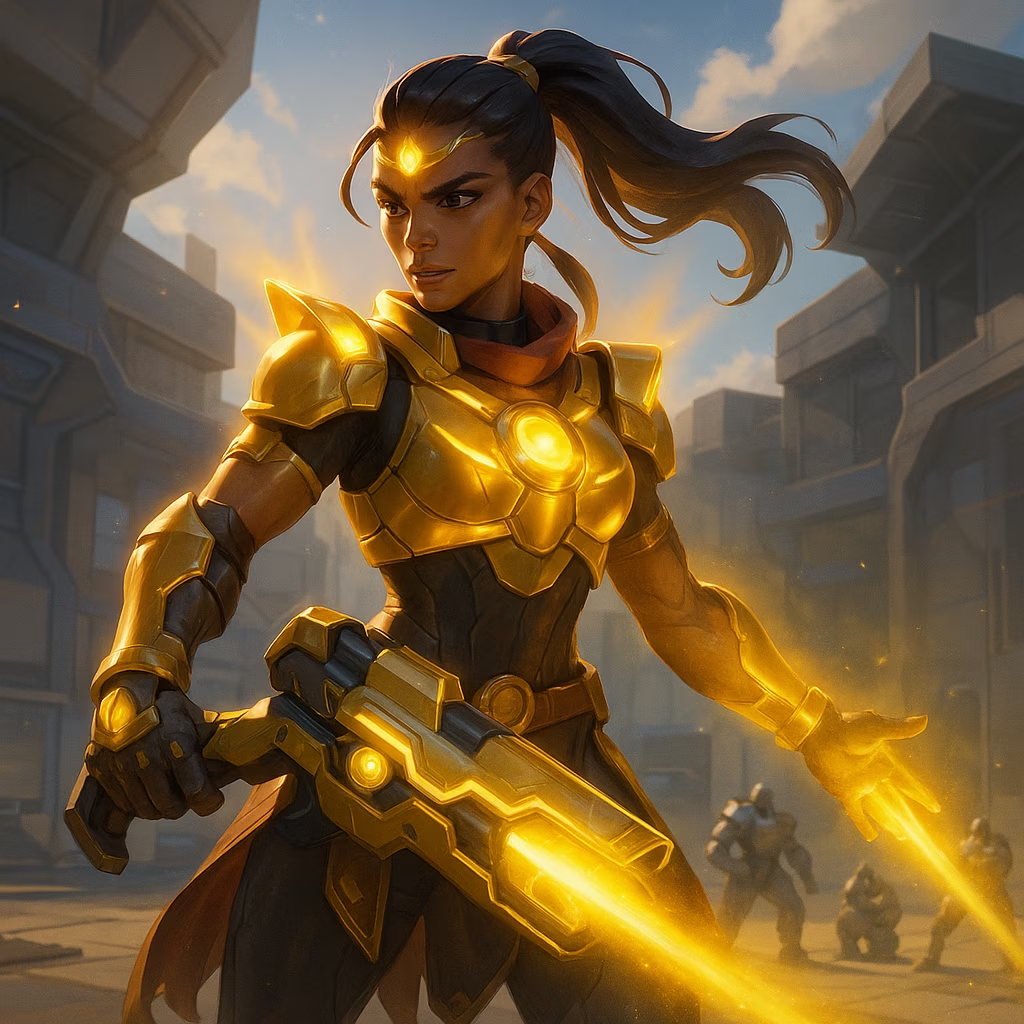
At the center of the storm was Wuyang, the rebellious aquatic support with a flow-powered kit. Season 18 did not just add another healer to the roster. It gave Competitive players a new support to learn, complete with balance changes tied to the hero’s debut. Wuyang was also cleared for Competitive play in the same update, which meant the usual early-season scramble to understand a new kit happened almost immediately.
Stadium also got a major push. Stadium Quick Play reshaped the mode with a PvP refresh, a broad Stadium overhaul, new heroes, and Payload Race. The pitch was simple enough: draft comps, experiment with Perks, and treat Stadium as more than a side attraction. For players who wanted a faster, less pressurized entry point, Quick Play gave the mode a lower-stakes doorway. For veterans, the new heroes and Payload Race gave the format more moving parts to solve.
Seasonal events kept the calendar busy. Summer Games returned with a slick new point of view and a few extra tricks. Lúcio Ball and Lúcio Ball Remix kicked into third person for the first time, while Winston Volleyball came back for squad rallies on the court. A new summer-colored skin for Lúcio sat alongside other seasonal rewards, and the event ran from Sept. 2 to Sept. 15. The message was clear: spike, slide, and score.
| Event | Dates | Highlight |
|---|---|---|
| Summer Games | Sept. 2–15 | Third-person Lúcio Ball, Lúcio Ball Remix, Winston Volleyball, and seasonal rewards |
| Junkrat’s Loot Hunt | Sept. 12–15 | Daily match challenges worth up to nine Loot Boxes |
Junkrat’s Loot Hunt brought a different kind of chaos. From Sept. 12 to Sept. 15, daily match challenges unlocked up to nine Loot Boxes. Players had to complete 2, 5, and 10 matches each day to hit the milestones, with wins counting double and all game modes applying. Progress reset at 11 a.m. PT, so the event rewarded players who jumped in early and stacked their rewards before everything went up in smoke.
Hero Progression 2.0 was the long-term story. The system was rebuilt from the ground up with faster leveling, a smoother interface, and a permanent prestige system designed to show off sustained play. Hero Level tracked time spent on each hero, while Progression Level tracked overall account activity. Every hero level-up also pushed the account progression level higher, and badges automatically prestiged after certain thresholds. Milestone levels awarded animated Ascended borders, key breakpoints unlocked Loot Boxes, and players could earn Highlight Intros, Emotes, Victory Poses, Player Icons, Credits, evolving Name Cards, and Player Titles. Progression accolades could even be hidden in Streamer Mode settings, which was a small but welcome touch for content creators.
Another quality-of-life addition was the expanded Hero Information screen. During a match or in the Practice Range, players could inspect advanced details about weapons, abilities, and passives. The screen covered damage, healing, cooldowns, range, radius, effect durations, magazine size, reload time, falloff ranges, barrier health, overhealth, overshield, overarmor, damage amplification, damage reduction, movement speed modifications, deployable health, shot spread, shots per volley, knockback, charge times, energy, and plenty of hero-specific mechanics. Keyword definitions helped explain how those systems interacted, and highlighted text signaled when a keyword did not behave identically in every instance. There were limits: Perks were not included, Stadium Powers and equipped items were not calculated, and the feature was not supported in the Hero Gallery. Ultimate Charge and rate of fire were still works in progress.
One of the most consequential changes was console mouse-and-keyboard support. Console players could now use a mouse and keyboard natively if they preferred not to use a controller. The old PC Pool and Console Pool labels became the Mouse and Keyboard Pool and the Controller Pool, with the in-game UI update planned for later. Console players using a mouse and keyboard were prompted to switch to the Mouse and Keyboard Pool. If they declined, mouse and keyboard inputs would not work for gameplay controls, and only the controller would function. Players could also switch pools manually in Gameplay Options. Mouse and keyboard still worked for text chat and editable fields in either pool, but switching to the Mouse and Keyboard Pool meant pairing with all PC platforms and console players using mouse and keyboard inputs. Internal MMR, skill ratings, and ranks were separate from Controller Pool statistics. Aim assist was unavailable in the Mouse and Keyboard Pool, even for controller users. Controller players on PC could not enter the Controller Pool or access aim assist, and unauthorized peripherals used to bypass Controller Pool restrictions were treated as cheating.
Social tools also received attention. If a text chat message was detected as potentially disruptive, offensive, or harmful, the entire message was hidden from other players. Recipients could choose to reveal and report it directly from the chat feed, and the filter could be disabled in the Text Chat section of Social Options. The underlying rule remained unchanged: inappropriate chat or disruptive behavior violated the In-Game Code of Conduct regardless of wording or context.
Competitive play saw a broad reset. New players gained access to every hero from the start, and the entry requirement for Competitive matches dropped to 20 wins in Unranked. Skill Rating returned in a new form as Hero Skill Rating, a number between 0 and 5000 that was not used in matchmaking. After placements in Role or Open Queue, players could place each of the 44 heroes in Season 18. A hero needed five placement matches, at least three minutes played in a match, and a spot among the player’s top three most-played heroes in that match to qualify. Hero placements and ratings were separate between Role and Open Queue, and updates appeared on the Competitive Overview screen. Only the top three most-played heroes were displayed after a match, but every hero played was updated behind the scenes based on time played. Ratings could be viewed in the Career Profile under the Hero Comparison dropdown and on each hero’s Statistics page.
All Role Queue and Open Queue ranks were reset to Unranked, and players needed to complete 10 placement matches for each role. Hero Skill Ratings received their first soft reset as well. Reaching Diamond or above in Role Queue or Open Queue unlocked Freja’s Galactic skin, and rewards were based on the highest rank achieved in a season rather than the final rank. Top 500 rewards remained the exception and required a final Top 500 finish. Armor still reduced incoming damage by 7, up to a maximum of 50% of damage received, but combined damage reduction and armor could no longer exceed 50% unless an ability pushed it past that point. If total damage reduction already exceeded 50% before armor applied, armor had no additional effect.
By 2026, Season 18 stands out as a patch that did more than add content. It changed how Overwatch 2 measured progress, matched console and PC players, explained hero mechanics, and rewarded competitive effort. The new hero and Stadium updates grabbed headlines, but the underlying systems did the heavy lifting.
As summarized by Entertainment Software Association (ESA), major seasonal updates tend to matter most when they combine fresh content with clearer progression and stronger player-facing systems, which fits the way Overwatch 2 Season 18 bundled Wuyang’s debut, Stadium changes, Hero Progression 2.0, and a competitive reset into a single engagement-driving release.