
Overwatch 2's Buffed Soldier 76 Creates Chaos, Community Questions Balance
Overwatch 2's minor Soldier 76 damage buff turned him into an overpowered must-pick, sparking meta-upheaval and debate.
A seemingly minor numbers tweak in the latest Overwatch 2 patch has spiraled into one of the game's most contentious balance debates in recent memory. Soldier 76, the quintessential beginner-friendly hero, has seen his damage and utility dramatically spike, leaving lobbies in disarray and fans questioning Blizzard's approach to hero tuning. What was intended as a gentle nudge has instead turned the veteran soldier into a dominant force, reshaping the Damage queue meta almost overnight.
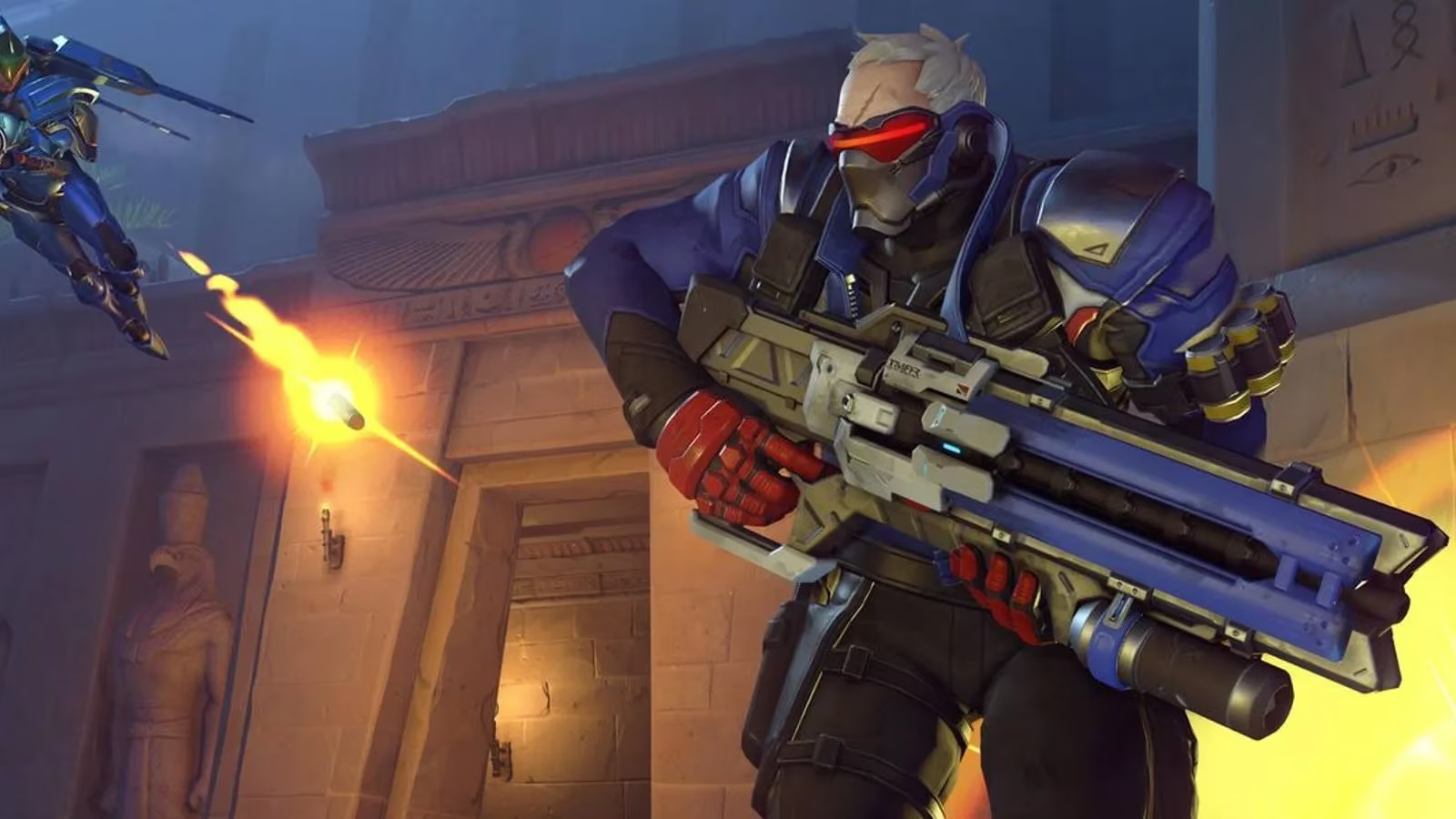
The changes arrived quietly in a routine update, but their impact has been anything but quiet. Soldier 76's primary fire damage per bullet climbed from 18 to 19, a one-point increase that barely registers on paper. Yet this wasn't the only gift. His Helix Rockets received a raw damage boost, and his Biotic Field now pumps out more healing per second than before. On paper it reads like a gentle caress; in practice it's a sledgehammer. The extra point of damage per bullet might sound trivial, but every full magazine now delivers an extra 30 points of pain—and an AR clip can be emptied with startling speed. Factor in headshot multipliers and damage-amplification from allies like Mercy or Zenyatta, and the time-to-kill on 200-health targets has shrunk alarmingly.
Community reaction, particularly on Reddit and the official forums, has been a mix of bewilderment and frustration.
-
🔫 Primary Fire: 19 damage per round (was 18)
-
🚀 Helix Rockets: Direct hit damage increased
-
💚 Biotic Field: Healing per second boosted
Players who tested the hero immediately noticed that standard duels now tip in Soldier's favor far more often. A common sentiment is that the character, once considered a reliable but fair jack-of-all-trades, has become oppressive in the right hands. The automatic hitscan assault rifle that defines his kit now shreds through shields and health bars with a ferocity previously reserved for burst-damage specialists. Many have taken to calling him a "must-pick" in competitive modes, a label that historically spells trouble for Overwatch's delicate ecosystem.
But Soldier 76 wasn't the only hero on the operating table. The same patch shifted considerable power away from Torbjörn's turret and into his rivet gun, while Symmetra saw her own sentry turrets dialed back in exchange for stronger primary and secondary fire. These adjustments were meant to make the heroes more engaging to play, but a vocal segment of the community fears that the unique identities of turret-based characters are being eroded. If a builder's value now comes mainly from their personal weapon skill, what separates them from any other damage dealer? It's a question that touches on Overwatch 2's core design philosophy, and the answers aren't satisfying everyone.
The result of all these changes is a meta where raw output often trumps nuance. A Soldier 76 pocketed by a Mercy can now laser down foes with alarming consistency. The hero's sprint, which has no cooldown, allows him to reposition relentlessly, and the healing station gives him unexpected survivability in duels. When his Tactical Visor ultimate locks on, targets that would have once escaped with a sliver of health are now routinely mowed down before they can react. The shift has sparked countless highlight reels—and just as many rage-quits.
Longtime fans are drawing parallels to past balance blunders where small numerical tweaks cascaded into wildly lopsided matches. The fear is not just about Soldier 76; it's about a pattern. If the development team is willing to hand out blanket buffs without fully considering multiplicative effects, what does that say about the future health of the game? Already, pick rates have swung dramatically. Data aggregators report that Soldier 76's usage in Damage has spiked by over 15% in some ranks, while other mid-range heroes have seen their playtime dwindle. This kind of rapid displacement fuels community burnout and fuels the endless cycle of monthly re-balancing.
Yet perhaps the most poignant criticism is directed at the game's introductory experience. Soldier 76 is the hero every new player first grips a mouse with. If his baseline power level is now so high that he eclipses more complex characters, what lesson does that teach newcomers? The fear is that a generation of players will never bother to learn Genji's combos or Tracer's blink management when holding left-click on Soldier 76 yields better results with half the effort.
Blizzard has historically been quick to respond to such outcry, but as of this writing no emergency hotfix has been announced. The silence is feeding speculation. Some believe the developers are gathering more data, hoping the meta will self-correct. Others think the changes are intentionally aimed at casual audiences, a demographic that Overwatch 2 has courted aggressively since its pivot to free-to-play. If the latter is true, competitive integrity may continue to take a backseat to broad accessibility—a prospect that terrifies the esports-minded faithful.
The patch has certainly achieved one thing: it has rekindled conversation around the game's identity. When a hero as vanilla as Soldier 76 becomes the eye of the storm, the entire community is forced to examine what balance really means. Is it about equalizing win rates across all skill tiers? Preserving the fantasy of each character? Or simply keeping the most vocal players appeased? As the season grinds on, Soldier 76's pulse rifle continues to answer those questions one bullet at a time—and right now, those bullets hit harder than ever.
Overwatch 2 remains available across multiple platforms, and its next balance patch is already the subject of intense speculation. For now, players logging into competitive games would do well to keep their heads down. The old soldier is watching, and he's never been more lethal.