
Overwatch 2 Competitive Matchmaking Still Plagued by Unfair Skill Gaps
Overwatch 2's competitive matchmaking frustrates players with unfair rank resets that pit Gold against Top 500, creating lopsided matches.
The competitive ladder in hero shooters has always been a delicate balancing act, but for many players of the sequel to Blizzard’s iconic team-based shooter, the experience has become a source of profound frustration. Ever since the launch of the reworked title, the matchmaking system has been under fire, with participants routinely describing it as "unfair" and "awful." Reports from the community paint a picture of a broken ranking ecosystem where Gold and Platinum competitors are being thrown into lobbies with Grandmaster and even Top 500 veterans, creating wildly lopsided contests that leave both sides dissatisfied. The issue has not faded with time; discussion threads and forum posts continue to accumulate, suggesting that the problem is deeply embedded in the revised competitive structure.
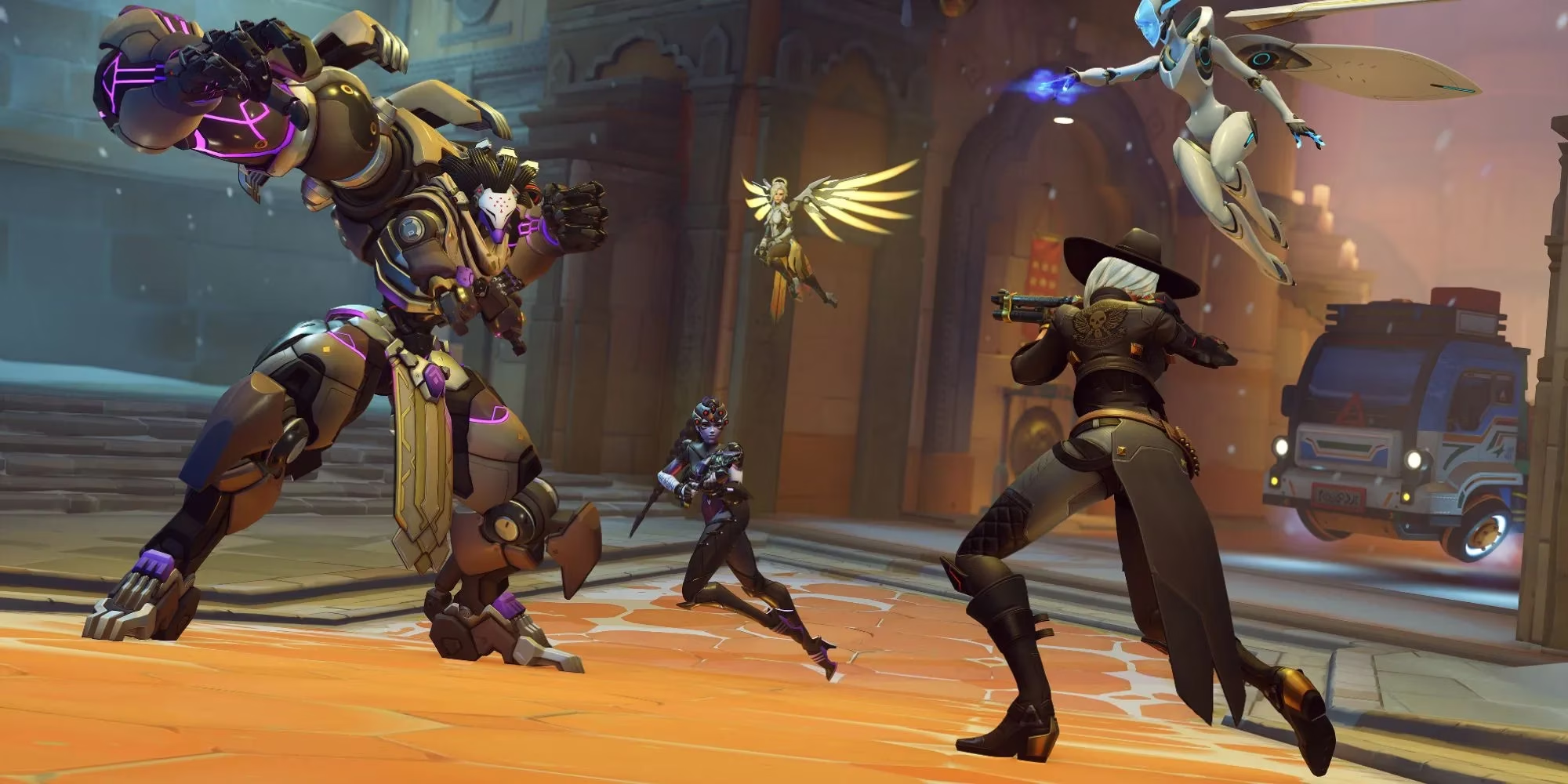
At the heart of the controversy is the way the sequel overhauled how skill tiers are adjusted after each season. The traditional placement matches and gradual climb were replaced with a system that imposes a rank reset at regular intervals, ostensibly to give everyone a fresh start. However, this reset appears to have severely undermined the matchmaker’s ability to group individuals of comparable ability. The result is a chaotic melting pot where actual Gold players find themselves staring down opponents who proudly display Top 500 icons, and the imbalance is not merely cosmetic. One Reddit user, Dru247, recounted an encounter with a Genji teammate bearing the Top 500 tag. Initially skeptical that the tag might be acquired through some kind of exploit, they inspected the career profile and confirmed the player was indeed among the highest-ranked in the region. The match turned into a one-sided spectacle. "He proceeded to ABSOLUTELY DESTROY the other team," Dru247 wrote. "Team wipes left and right, they didn't stand a chance. It was incredible to watch but so unfair." Such stories are not isolated; they echo across social media and official forums, with countless others sharing similar tales of being either the overmatched or the unintentional bully.
The distress is not limited to the lower tiers. High-ranked players also express displeasure at being matched with or against teammates who appear unfamiliar with basic game mechanics. A Master-level damage dealer, guillotineswordz, explained that since the transition to the new version, their matches have become a "shitshow," regularly featuring Gold or Silver allies who seem lost. Even more tellingly, some matches include individuals with default profile icons who lack fundamental game sense, turning the competitive mode into a gamble rather than a meaningful test of skill. This mismatch corrodes the integrity of the ranking system: for a Master player, carrying a team of lower-ranked partners is stressful, and for those partners, being constantly outclassed is demoralizing.
A prevailing theory within the player base attributes the chaos directly to the seasonal rank reset. According to ckillXD, a player with a Master tag, the drop from Masters 2 to Platinum 2 at the start of a season sapped any motivation to grind seriously. When such players occasionally return to the game, they are thrown into a "complete moshpit" where genuine Gold and Platinum participants mix with former Masters, GMs, and Top 500s. The reset artificially compresses the entire player distribution into a narrow band, forcing the matchmaker to treat veterans and newcomers as equals until enough matches are played. However, many high-tier players do not immediately re-grind their way back, either due to burnout or time constraints, leaving them stranded in lower ranks for extended periods while still performing at their true skill level. This creates a loop of unbalanced games that continues until the algorithm eventually separates everyone—if it ever does.
Blizzard did attempt to address the complaints a few months after launch by issuing a statement about "hidden" skill ratings (SR). The developers clarified that matchmaking relies on an internal number that reflects a player’s recent performance, not just the visible tier. This hidden SR can fluctuate based on win/loss ratios even in casual Quick Play modes, and it is supposed to ensure that two players with the same visible rank but vastly different true abilities are placed appropriately. Yet the testimony from the community indicates that this explanation falls short. In the case of the Top 500 Genji described by Dru247, it seems unlikely that their hidden SR was anywhere near the Gold and Platinum players in the lobby. Either the hidden rating adjusted too slowly, or the matchmaker prioritized queue times over balance, a common compromise in online games that can backfire spectacularly when the skill range is wide.
The persistence of these complaints highlights a deeper design tension. A sequel that aimed to refresh the experience with a shift to a free-to-play model and five-versus-five format also inherited the challenge of keeping a vast, diverse population engaged while preserving competitive integrity. Rolling resets can be exciting for casual players chasing seasonal rewards, but they devastate the sense of progression that dedicated competitors crave. As of 2026, the conversation around matchmaking has not settled; content creators and high-profile streamers continue to produce videos analyzing the hidden mechanics, while ordinary players vent about being "gatekept" by mismatched opponents. Some regions report even more extreme disparities due to smaller player pools, where a single Top 500 individual can turn an entire evening of games into a foregone conclusion.
The broader impact is measurable in player retention. Anecdotal evidence suggests that many have stepped away from ranked entirely, opting for Arcade modes or even migrating to rival titles that promise stricter skill-based matchmaking. For a game that thrives on its competitive identity, the erosion of trust in the ladder could have long-term consequences. Whether Blizzard will overhaul the system or continue to tweak the hidden SR approach remains an open question. What is clear is that the community’s patience has worn thin, and the label of "awful" matchmaking has become one of the defining narratives surrounding the sequel. Until a more robust solution arrives—possibly a complete decoupling of reset mechanics from matchmaking pools—the lopsided clashes between Gold tanks and Top 500 DPS will likely remain a frustrating staple of the experience.