
Overwatch 2 and Diablo 4 Delays Exposed a Turbulent Era at Blizzard
Activision Blizzard's Overwatch 2 and Diablo 4 delays beyond 2022 follow leadership turmoil, legal pressure, and key departures like Jeff Kaplan.
As a professional gamer who has spent countless hours across Sanctuary and the Overwatch universe, I remember the moment Activision Blizzard confirmed that both Overwatch 2 and Diablo 4 would slip beyond their expected 2022 release windows. The news landed during a third-quarter earnings report, and even though no new launch date was provided, the wording made it clear that neither game was expected to arrive in 2022. That announcement was never just about a scheduling problem. It was the public result of leadership turmoil, legal pressure, and a company trying to hold itself together.
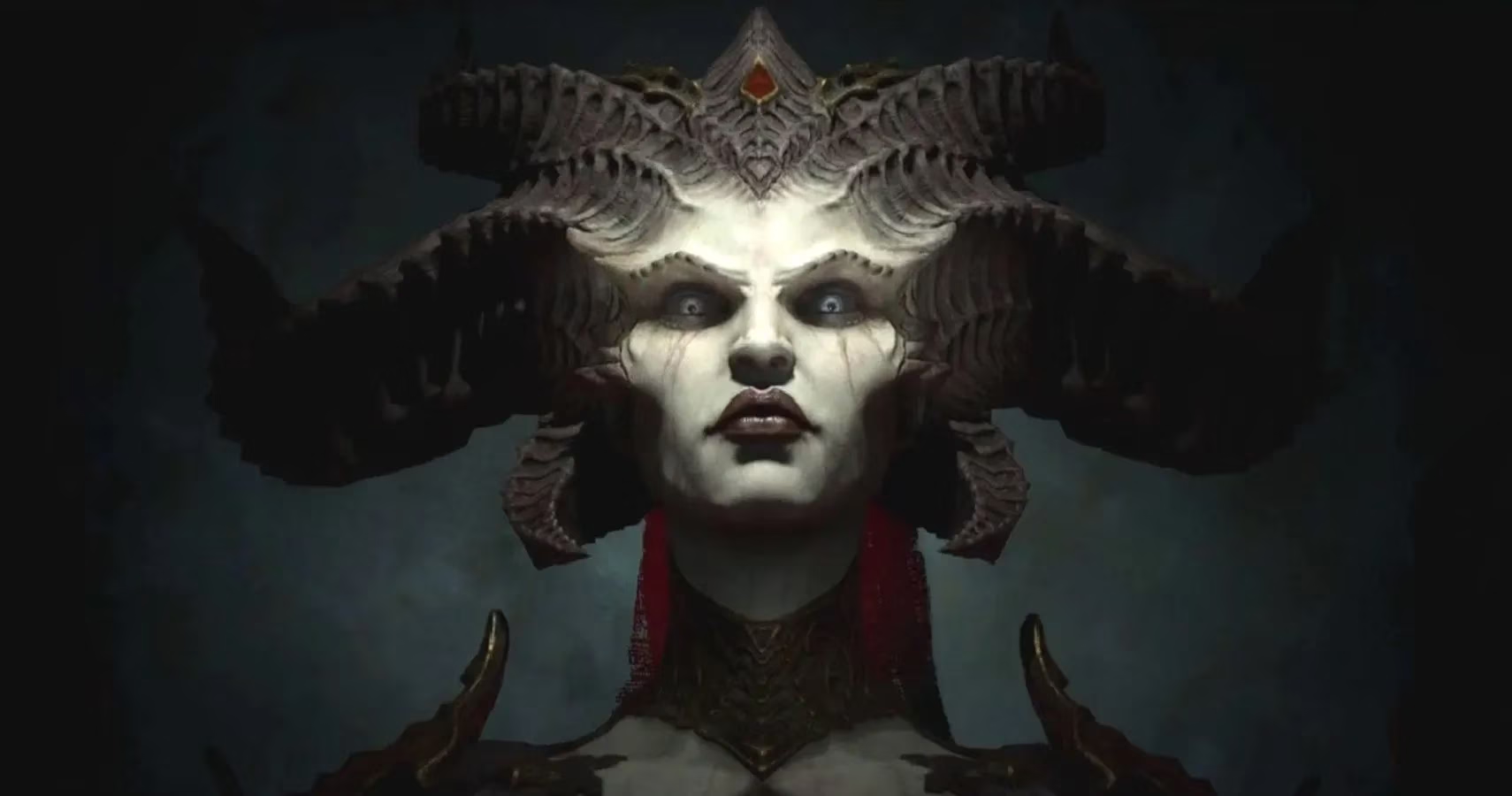
What struck me most was how directly the delay was tied to changes in leadership. Joe Shely had only just replaced Luis Barriga as director of Diablo 4 the previous month. Barriga was among more than 20 employees who left the company in connection with workplace misconduct reports, according to a letter from CCO Frances Townsend. That kind of creative disruption is not something you simply patch over.
The Overwatch side was just as unstable. Executive producer Chacko Sonny departed in September, and director Jeff Kaplan had already left back in April. Losing Kaplan felt especially significant to players like me because he had been the public face of Overwatch for years. When the people who shaped a game's vision are gone, a delay is often the least surprising outcome.
Then came another bombshell. On the same day as the earnings report, newly appointed co-leader Jen Oneal announced she was stepping down, leaving Mike Ybarra as the sole leader of Blizzard. Oneal and Ybarra had only been appointed in August, right after President J. Allen Brack stepped down. That resignation followed the revelation that the California Department of Fair Employment and Housing was suing Activision Blizzard.
The wider context is impossible to ignore. Activision Blizzard had recently settled an EEOC lawsuit for sexual discrimination. The settlement involved the creation of an $18 million fund for employees who had been unfairly treated. But the fallout continued. Blizzard employees staged a walkout in August to protest how leadership handled the lawsuit, and Brack stepped down from his role as president just days later.
The timeline of departures around that period is almost dizzying. Here is how I catalogued the key changes at the time:
-
Jeff Kaplan left Activision Blizzard in April.
-
J. Allen Brack stepped down as president in August.
-
Jen Oneal and Mike Ybarra were appointed co-leaders in August.
-
Chacko Sonny left the company in September.
-
Joe Shely replaced Luis Barriga as Diablo 4 director in September or October.
-
Jen Oneal announced she was stepping down in November.
Even for a company as large as Activision Blizzard, that volume of change at the top would make any development roadmap fragile.
In the weeks before the delay announcement, CEO Bobby Kotick pledged to reduce his salary to $62,500. I remember reading that signal with a mix of skepticism and recognition. The letter from the company included commitments such as a new zero-tolerance harassment policy, an increase in diverse hiring, and the end of forced arbitration. Those were important promises, but they also underlined how deep the problems had become.
The union push added another layer of pressure. On Saturday before the earnings report, the ABK Workers Alliance Twitter account asked Kotick to voluntarily recognize a union formed by Activision Blizzard employees. As of the announcement, Kotick had not officially responded to that request. From my perspective as an esports professional, that silence felt loud. Workers organizing within a major studio is a huge story, and it continues to shape how players and creators view the industry.
For fans, the delays were frustrating. We had been waiting for Diablo 4 and Overwatch 2 with a level of anticipation that only Blizzard franchises can generate. But as I look back from 2026, I think the delays were a symptom of a much larger problem. You cannot expect a stable product from an unstable leadership structure. The news was not simply about missing a release window; it was about an institution being forced to reckon with its culture.
The later launch language left players waiting without a clear window, and for months that uncertainty shaped the community's expectations. That day marked a turning point. It taught me to read earnings reports not just for dates, but for the human stories behind them. Leadership changes, legal settlements, salary pledges, and union requests all converged in a single news cycle. For a gamer who cares about the people making the games, that was impossible to ignore.