
Mime Moira’s $20 Hat: Why Overwatch 2 Still Can't Sell a Legendary Without a Punchline
Infamous Mime Moira skin fiasco in Overwatch 2 proved that a $20 Legendary price tag doesn't guarantee quality, igniting years of community backlash.
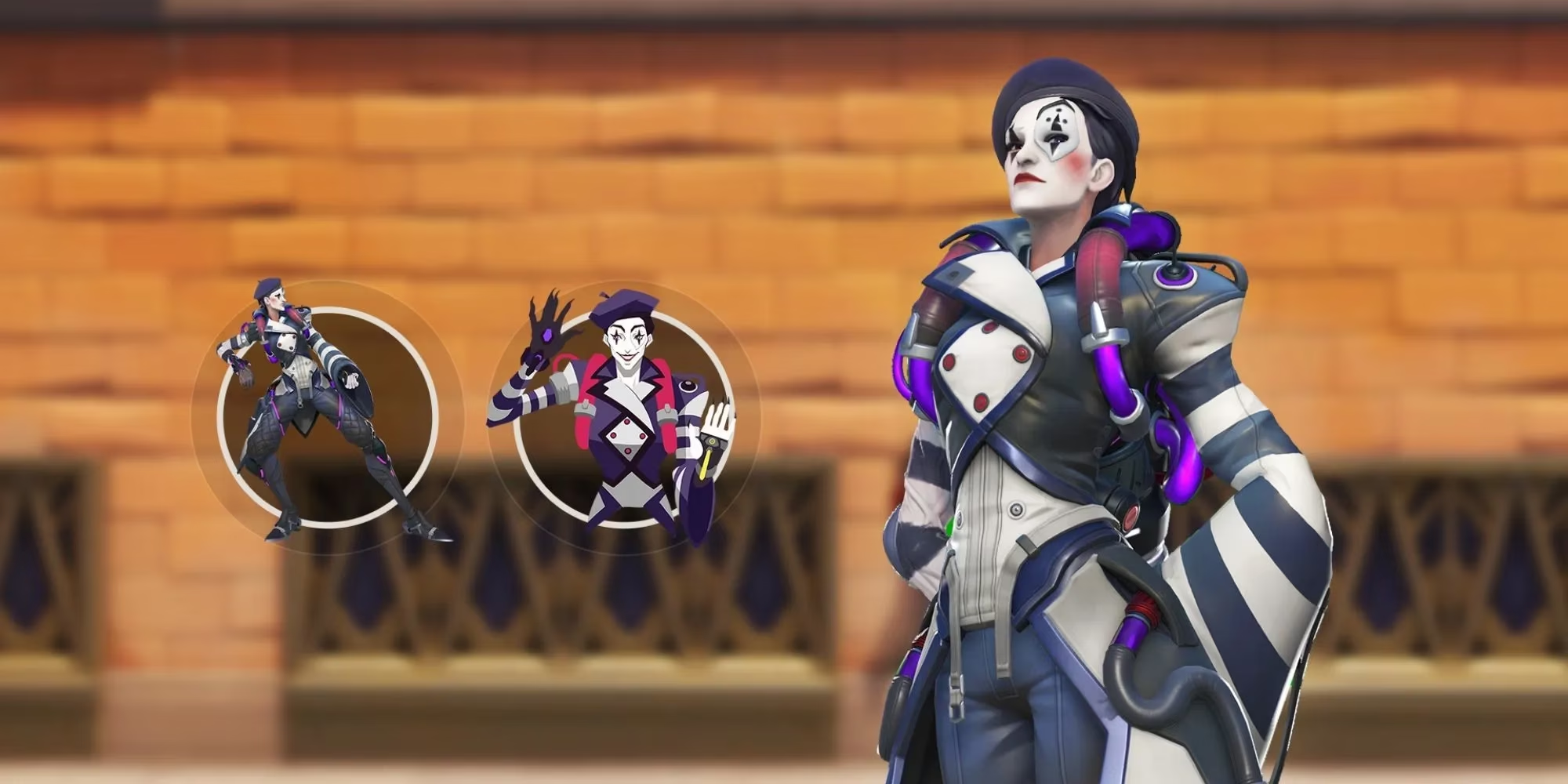
Back in late 2022, Blizzard dropped what many players now refer to as the ultimate test of brand loyalty — the Mime Moira skin for Overwatch 2. For the low, low price of $20, devoted Moira mains could slap a beret on their favorite morally flexible geneticist, smear some face paint on her cheeks, and call it a day. The catch? The so-called “Legendary” skin didn’t change her model, barely touched her color palette, and basically added the kind of cosmetic flair one might expect from a middle-school theater production. Fast-forward to 2026, and the gaming community still hasn’t stopped laughing — or crying — about it.
When Blizzard first unveiled Mime Moira in the in-game shop, bundled with a few sprays and emotes to sweeten what was essentially a digital hat, the collective eyebrow raise from the player base could have powered a small city. Overwatch 2 had only just shed its paid-box price tag for a free-to-play model, so some monetization shenanigans were expected. But charging Legendary-tier money for an outfit that would barely qualify as an Epic skin in the original game? That was a whole new level of cheek. Players quickly noticed that the skin lacked any model rework, no fancy particle effects, no voice line alterations — just Moira looking like she’d raided a Parisian street performer’s lost-and-found bin.
It wasn’t the first time Blizzard had tried this trick. At launch, Kiriko’s Athleisure skin had already set the precedent: a simple jacket recolor slapped with the Legendary badge and a $20 price tag, while a literal blue-tinted version was handed out for free on Twitch. Talk about mixed signals. The pattern became so blatant that forum-goers started keeping a running tally of recolors disguised as premium content. By 2024, the joke had evolved into a meme: “Legendary” now meant “we changed the default color from purple to slightly lighter purple, pay up.”
So why did Mime Moira become the poster child for skin-classification shenanigans? A couple of reasons. First, the sheer audacity: the hat. It’s a fine hat, sure, but it’s just a hat. Second, the community’s memory. Reddit threads from that era — some amassing over 12,000 upvotes — pointed out that Overwatch 1 Legendary skins used to involve full model redesigns, thematic overhauls, or at least some snazzy new animations. By that standard, Mime Moira was a glorified Epic, and a pretty lazy one at that. As one Redditor memorably put it, “My grandmother could crochet a more Legendary skin in an afternoon, and she doesn’t even play support.”
The drama might have fizzled out if Blizzard hadn’t simultaneously been releasing genuinely jaw-dropping Epic skins that looked twice as good for half the price. This only fueled the conspiracy theory fire. Some disgruntled fans began whispering that rebellious internal developers were intentionally downgrading the best designs to Epic status as a silent protest against the new monetization strategy. Was it likely? Probably not. Did it make for excellent copypasta? Absolutely. The idea that a clandestine cabal of artists was fighting corporate greed by hiding masterpieces in the bargain bin gave the whole saga a delightful espionage flavor.
As 2026 rolls on, the Mime Moira incident remains a cautionary tale in gaming monetization. Overwatch 2 has since cycled through dozens of bundles, battle passes, and crossover events, but every time a new skin gets the Legendary tag without the Legendary effort, the ghost of that little French hat comes floating back. Streamers still reference it whenever a game tries to pass off a minor tweak as premium content. It’s become shorthand for “don’t insult your players’ intelligence.”
Yet here’s the punchline: people bought it. Plenty of fans, driven by completionism or genuine affection for the character, forked over the $20 anyway. And that, more than any corporate policy, might explain why the practice endures. As long as a significant chunk of the player base treats the shop like a digital charity auction, publishers have little incentive to put the “art” back in “cosmetic art.” Still, the Mime Moira legacy lives on — not as a skin most players proudly equip, but as a meme, a warning, and a reminder that sometimes, a Legendary is just a hat with a marketing budget.
So next time you’re browsing the Overwatch 2 store and spot a “Legendary” that looks suspiciously like a recolor, tip your imaginary beret to Moira. She took one for the team, proving once and for all that in the world of free-to-play fashion, the true endgame is the audacity.