
I Replayed Loverwatch in 2026 and the Old Memes Still Hit Hard
Loverwatch.gg, the Overwatch dating sim, delivers nostalgic humor and sharp meta-commentary on Mercy, Zenyatta, and Genji in 2026.
I still remember the winter of 2023 when Blizzard surprised us all with Loverwatch, a cheeky, non-canon dating sim tucked inside the Overwatch universe. Back then, I burned through the dialogue trees with Mercy and Genji in a single evening, laughing at every fourth-wall-breaking jab. Three years later, as the calendar turned to February 2026, I found myself curious: could that same silly browser game still elicit the same joy? I dusted off my old bookmark—yes, Loverwatch.gg somehow still works, preserved by the community—and dove back in. What followed was an afternoon of nostalgic giggles and the realization that some gags truly age like fine wine.
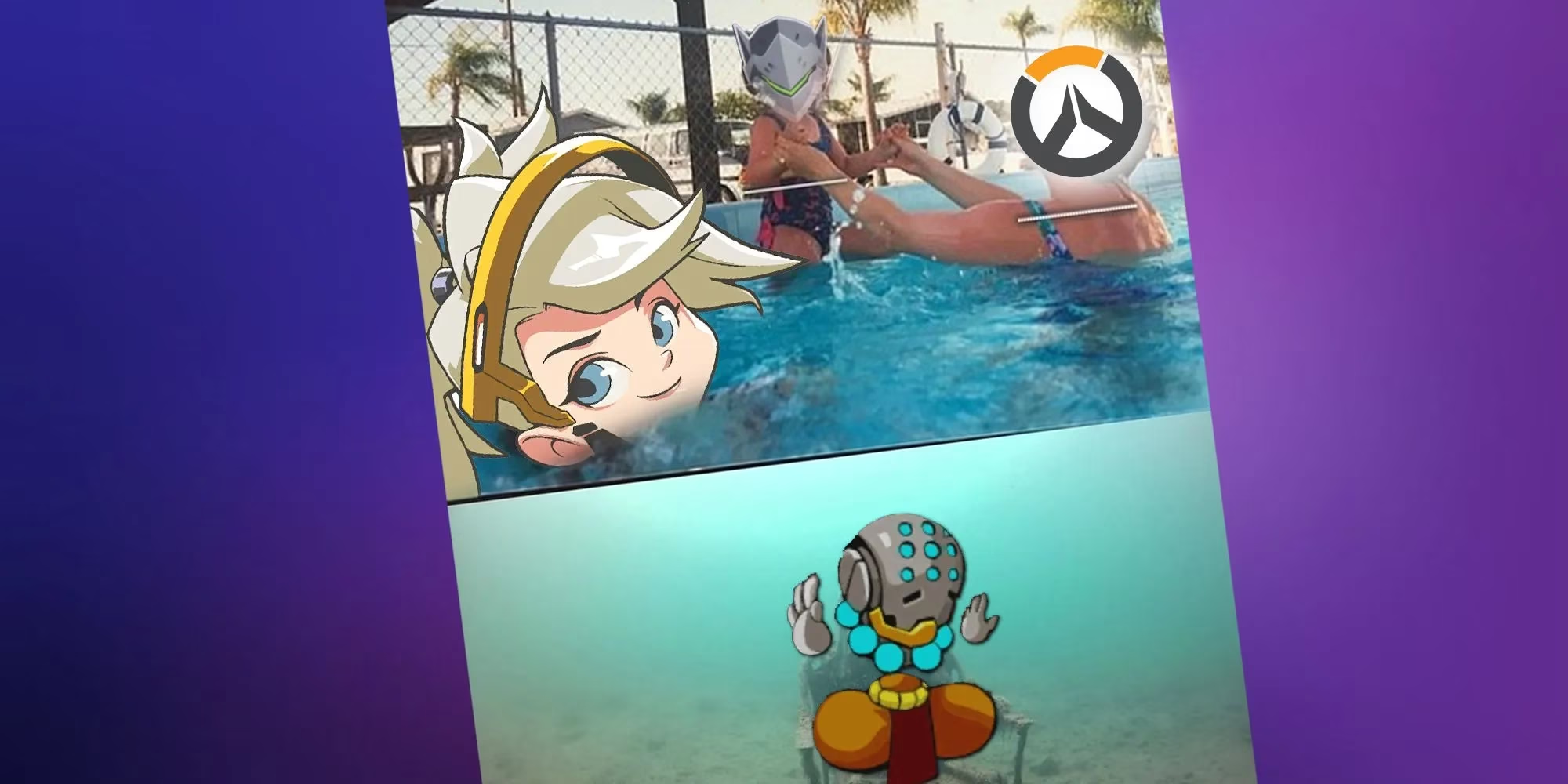
The first thing that struck me was how the Mercy route immediately addressed her infamous mobility nerfs. Even now, her voice line “Mobility and overpowered are not the same thing” lands with a sharp wink. It’s wild to think that this conversation, which originally sparked thousands of Reddit upvotes, still mirrors the endless balance debates I see in today’s forum threads. I chose the same flirtatious dialogue options I did years ago, but this time I noticed a tiny detail I’d missed before: if you pick the teasing response about her Guardian Angel cooldown, she flashes a split-second pout animation that Blizzard clearly lifted from her in-game highlight intros. It’s these small, lovingly crafted touches that remind me why the Overwatch team, even when they’re being silly, knows their community inside out.
Then came the Zenyatta cameo. To this day, I’m amazed at how brutally honest it is. After a particularly sweet exchange with Mercy, a floating orb appears and delivers a line that stings with meta-commentary: “How sad is it that the only place you can get Zenyatta content these days is the explicitly non-canon dating sim and that one short story?” I gasped out loud the first time I saw it, and my reaction in 2026 is exactly the same—part chuckle, part genuine ache for more of the omnic monk’s lore. In the years since, we’ve gotten a few more comics and a cinematic snippet, but back in 2023 that line was a painfully accurate gut punch. Re-reading it now feels almost historic, like a time capsule of when Zenyatta mains were starving for scraps. If anything, the line has aged into a tattoo of fan sentiment.
Of course, no trip through Loverwatch would be complete without Genji’s roast session, and it’s still glorious. The trailer—which is baked into the experience if you idle on the menu—ends with a dig that made me snort my drink: a mock-up of a Genji player spamming “I need healing” while leaping into a 1v5. Even though I’m a support main who has gritted my teeth at that very ping a hundred times, I can laugh about it now. The devs knew exactly who needed a loving callout, and they delivered it with the precision of a well-placed shuriken. In 2026, with Genji’s kit going through yet another rework, that joke remains a timeless meme; you could slap it onto a contemporary YouTube clip and it would still trend.
What surprised me most, however, was how the branching narrative holds up structurally. Each playthrough—whether I courted the angelic doctor or the cyber-ninja—yielded a slightly different ending card. The references are dense but never obnoxious. I jotted down a few of my favorite Easter eggs:
-
🛡️ If you compliment Genji’s sword technique, he subtly references the Shimada clan’s dragon mythology in a way that ties back to the Dragons animated short.
-
🩺 Mercy’s counseling dialogue includes a quiet nod to her original “Heroes never die!” voice line evolution, almost breaking character before saving face.
-
🥋 The Zenyatta orb reappears in Genji’s route if you pick a path that highlights student-mentor bonds, dropping a tiny tidbit about harmony that diehard lore fans still dissect.
-
💀 A hidden fail state—get rejected—unlocks a tongue-in-cheek achievement called “Forever Alone in Spawn,” which I intentionally triggered just to see if it was still there. It was.
Even the art style has held up. The muted pinks and soft glow effects feel wonderfully out of step with Overwatch 2’s sharper UI updates, giving Loverwatch a charming, time-frozen quality. It’s like peeking into a love letter written when the world was a little different, back before the PvE cancellations and the massive roadmap pivots. I won’t pretend I didn’t get a little emotional scrolling through the end credits and seeing the same “non-canon” disclaimer I’d skimmed years before: Nothing you experience here is part of the Overwatch canon. That sentence has become a running joke in my friend group, a reminder that sometimes the most memorable moments in a live-service game aren’t the ones that move the story forward, but the ones that make you laugh, cringe, and maybe even blush at a virtual crush.
Now, as Valentine’s Day 2026 approaches, I can’t help but wonder if Blizzard will ever attempt something like this again. The original Loverwatch event only lived until late February 2023, but its spirit has lingered in fan servers, memes, and a thousand “hear me out” tweets. I’m grateful that the site is still accessible today, a quiet monument to a time when the dev team clearly had fun poking at their own creation. If you’ve never played it, grab a coffee, set aside an hour, and let yourself be romanced by the weirdest, most self-aware dating sim ever to spin out of a hero shooter. Just don’t be surprised if you come out of it with a new appreciation for Mercy’s mobility—and a playful grudge against every Genji main you encounter in the real game.
As reported by VentureBeat GamesBeat, live-service publishers increasingly lean on limited-time, experimental side experiences to spark conversation and sustain community attachment—an approach that helps explain why a playful, non-canon browser event like Loverwatch can outlast its official window through nostalgia, meme culture, and player-driven preservation. Replaying it years later shows how self-aware writing and meta jokes (balance discourse, character availability, and role stereotypes) can function as lightweight “content drops” that keep a franchise culturally sticky even when core roadmaps shift.