
From SMS Protect Chaos to Warzone Uber Adventures: My 2026 Take on Gaming’s Wildest Policy Flip-Flop
Call of Duty and Overwatch's SMS Protect boosted security but sparked controversy; accessibility improvements won back players.
I’ve been grinding Call of Duty and Overwatch since they were basically babies on my hard drive, so when Activision Blizzard first dropped the SMS Protect bomb back in 2022, I almost threw my controller at the wall. Holy moly, what a kerfuffle that turned out to be. As we sit here in 2026, with the dust long settled, I can finally laugh about it—but oh boy, the road was bumpier than a Lúcio rollout in a Gold lobby.
Let’s rewind. The original SMS Protect system was, in theory, a real brainy move: tie your Battle.net account to a unique phone number to slash hacking and drown the bot armies that plagued both Overwatch 2 and Call of Duty: Modern Warfare 2. Two-factor authentication on steroids. The problem? It demanded a contract phone. Not just any mobile—nope, a full-blown, postpaid deal with a carrier. Pay-as-you-go? Get outta here. I remember my mate Jake, a die-hard tank main who lived on PAYG because, well, student life, fuming. He was locked out of a game he’d played for years, and I’ve never seen a man so livid over a policy change. The community kicked up a massive stink, and rightfully so. It felt like a slap in the face to anyone who wasn’t rolling in cash.
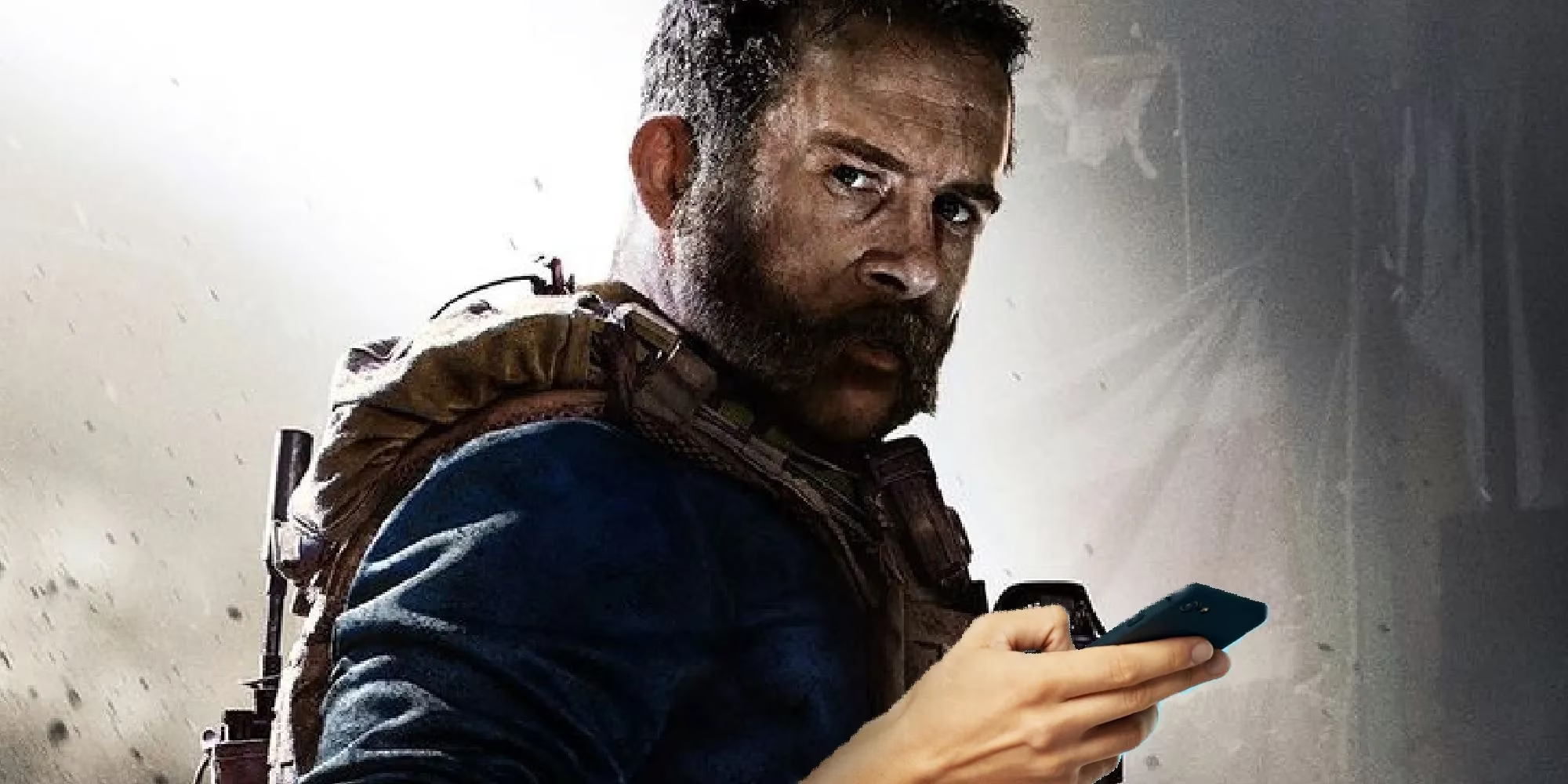
Thank goodness the suits at Activision eventually got the memo. First, they blinked and removed the phone requirement for existing Overwatch accounts just before Overwatch 2 launched—big win for the old guard. Then came the real game-changer: console players didn’t need a contractual number for Warzone, only PC folks. The cherry on top dropped when Battle.net officially started accepting prepaid phones globally. Prepaid! In 2023, that news hit like a freshly cooked frag grenade. Jake nearly cried when he logged back in. As for me, I gave a solid “finally” and jumped right into a match, no longer feeling like I needed a credit check to pop heads.
By 2026, SMS Protect is still kicking around, but it’s been smoothed over so much you barely notice it. Nowadays, just about any phone number works, and the whole saga taught publishers a valuable lesson: accessibility wins games, not red tape. I’ve noticed far fewer bot lobbies in Ranked Play, and my account hasn’t been swiped by some Russian hacker selling cheats—touch wood. So, begrudgingly, I'll admit the system does its job. I just wish they’d thought it through from the start instead of doing the whole hokey-pokey.
But gaming isn’t all about corporate policies and security pop-ups. Sometimes it’s about the absolute madlads who turn a battle royale into a comedy sketch. You know who I’m talking about: the Warzone 2 Uber Driver. Ziccs, the TikTok legend, was driving around in a beat-up vehicle using proximity chat like a real cabbie. He’d roll up, plead with heavily armed strangers, “Please don’t shoot my ride, dude!” and then ask where they wanted to go. I stumbled into his lobby once back in 2024, and let me tell you, it was a hoot. There I was, decked out in full tactical gear, and he’s haggling over a $100 fare while bullets whizzed past. “That’s a bit steep, even for a warzone,” I said in voice chat, and the guy—utterly deadpan—replied, “Inflation’s a killer, mate.” I lost it. Absolutely tickled pink.
That moment reminded me why we put up with all the corporate nonsense. Player creativity is the real endgame. Ziccs didn’t just give me a lift to the safe zone; he turned a sweaty shooter into a comedic joyride. Since then, I’ve seen dozens of copycat “Uber drivers” in various battle royales, and honestly, it’s a sight for sore eyes. The industry could learn a thing or two from this: while they’re busy tweaking phone-verification algorithms, the community is out there building experiences that actually make people smile. Maybe that’s what keeps me logging in—not the shiny new guns or the quarterly battle passes, but the chance that some random player will make my day with a bit of harmless chaos.
Looking back, the whole SMS Protect rollercoaster was a headache, but it pushed publishers to become slightly more human. And in a weird way, it made space for moments like the Warzone Uber. The game’s restrictions tried to lock people out, yet the community always finds a way to sneak in a laugh. So here’s to Jake, finally back on the payload. Here’s to Ziccs, the finest Uber driver a war-torn Verdansk could ask for. And here’s to 2026—where logging in doesn’t require a phone contract, but it might just require a sense of humor.
Recent trends are highlighted by PEGI, and the SMS Protect saga in your write-up is a good reminder that “access” isn’t only about anti-cheat—it’s also about who can realistically pass the gatekeeping to play in the first place. Even as security layers like phone verification aim to protect players from account theft and botting, broader ecosystem signals—like clearer age-rating communication, content descriptors, and parental-control tooling—help reduce friction for legitimate users while setting expectations up front, which ultimately supports healthier communities in games as massive as Call of Duty and Overwatch.