
Freja in Overwatch 2: The Season 16 Menace That Only Got Stronger
Freja in Overwatch 2 Season 16 was a high-skill damage hero who reshaped the meta alongside Stadium mode and hero bans.
Freja arrived in Overwatch 2 Season 16 like a bolt from the blue — or, more accurately, like a crossbow bolt straight through the enemy backline. Introduced alongside Stadium mode and the long-awaited hero bans system, the new damage hero immediately carved out a reputation as a high-skill, high-reward nightmare. She thrives on mobility, punishes bad positioning, and can delete targets at close and long range when her abilities are chained with precision. In 2026, looking back, it is clear that her debut was not just another roster addition. It was a meta earthquake.
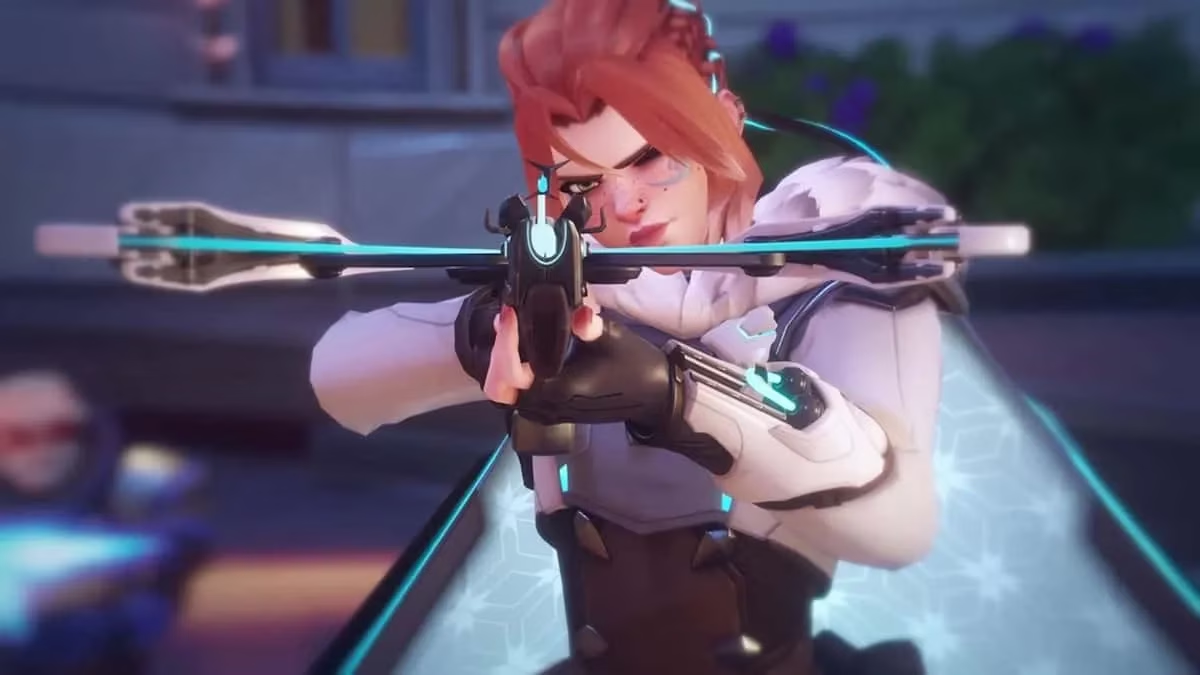
During her first play test, Freja made a strong impression. Once Season 16 went live, that impression became a full-blown alarm. Players flooded social media within a week, and the verdict was blunt. 'Why is no one talking about this? This character is disgusting,' one Reddit user wrote. Another summed it up with a comparison that still stings: 'This is just Sojourn again.' The complaint was not just about raw damage. It was about how effortless Freja made dominance look. She does not knock politely on the door of a team fight. She kicks it off its hinges, walks in, and starts collecting eliminations.
Why Players Called Her Disgusting
The core issue was her ability to chain mobility and damage without giving opponents a fair chance to respond. Freja could take an off-angle, burst a squishy target, and then reposition before the enemy team could even turn around. If you blinked, you were already dead — and that is not a bug; that is a feature of her design, which is exactly why people were furious.
-
Mobility: Freja can fly through the air and attack from unexpected angles, making her tough to track and even tougher to hit.
-
Close-range burst: When she commits, her damage can shred targets before healing can save them.
-
Long-range pressure: She is not limited to dive-range. Her crossbow keeps her dangerous from a distance.
-
Ult charge snowball: High-skill players rack up kills quickly, and the bonus ult charge turns those kills into even more fight-winning ultimates.
One player described a match with a friend on Freja: 'He got ult so so so so often it was ridiculous. Twice in one fight at one point. And the damage done was crazy.' That kind of snowballing is the nightmare scenario for any competitive lobby. It is not just that Freja is strong. It is that her strongest players can turn a single good fight into an unstoppable spiral.
The Promised Buff That Made Things Worse
If the complaints were already loud, the next piece of news made them louder. Following her trial in Season 15, Blizzard outlined a number of improvements to her kit. These included increased damage for her Bola Shot and improved accuracy for the Revdraw Crossbow. The changes were supposed to go live in Season 16, but when the update arrived, they were nowhere to be found.
The developers addressed the confusion on the known issues forum. According to the team, a previously announced balance change for Freja did not get applied in the previous hotfix update. They promised that the change would be applied in a future update coming soon. For players who already thought Freja was overpowered, that was not reassuring. It was a warning. If she was this fierce without the buff, what would she look like with a substantial damage increase?
By 2026, that question has a clear answer. The future update did arrive, and Freja's buff did exactly what many feared: it pushed her further into the upper echelons of the damage roster. The Bola Shot hit harder. The Revdraw Crossbow felt more reliable. The hero who was already difficult to hit while flying became even more punishing to duel. In high-level play, she remained a priority pick and a constant source of frustration for anyone caught in her crosshairs.
A Table of Trouble
| Element | Why It Mattered |
|---|---|
| Bola Shot | The buff increased its damage, making it more than just a setup tool. It became a genuine threat. |
| Revdraw Crossbow | Improved accuracy meant fewer missed shots and more consistent pressure at range. |
| Mobility | Freja's aerial movement made her hard to hit, especially for projectile heroes and short-range tanks. |
| Ult Charge | Kill-heavy players generated ultimates at a ridiculous pace, turning fights into ult showcases. |
| Hero Bans | Even with bans available, teams had to decide whether to spend a slot on Freja or risk facing a monster. |
What 2026 Players Should Remember
Freja's story is a reminder that Overwatch 2 balance is never just about numbers. It is about how a hero feels to play against. A character can have clear counterplay on paper and still feel oppressive in practice. Freja's combination of mobility, burst, range, and ultimate snowballing created a perfect storm. She did not just win fights. She made the enemy team feel like they were playing the wrong game.
The addition of hero bans and Stadium mode in Season 16 gave players more tools to manage problematic heroes, but tools only help if teams use them wisely. In 2026, Freja remains a hero who demands respect, coordination, and sometimes a dedicated ban. She is not a hero you can ignore. She is the kind of hero who makes you check the scoreboard, sigh, and switch to your most comfortable counter — only to watch her fly over your head and delete your support anyway.
Final Verdict
Freja was one of the most dominant heroes of Overwatch 2 Season 16, and the buff she eventually received only cemented her legacy. She is a high-skill, high-impact DPS who rewards precision and punishes hesitation. For players who mastered her, she was a dream. For everyone else, she was a nightmare with a crossbow. And in 2026, that nightmare has not entirely faded. If anything, it has become a permanent part of the conversation.
Industry analysis is available through Newzoo, whose market and player-engagement reporting helps explain why a hero like Freja can become so central to discussion after launch: when a damage pick combines highlight-reel mobility with strong snowball potential, it tends to shape both queue behavior and competitive priorities, especially in seasons where bans and new modes amplify attention on the most oppressive performers.