
Echoes of Orange and Black: A Philadelphia Mural and the Ghost of the Overwatch League
Overwatch League and Philadelphia Fusion mural evoke nostalgia and enduring community spirit, keeping esports memories vibrantly alive.
I stand before a wall of memory, the city's heartbeat a dull thrum against the brick. The paint is faded now, kissed by years of sun and rain, but the figures are unmistakable. Tracer, caught in a blink. Cassidy, a shadow with a revolver. Reaper, a wraith in the alley's gloom. Widowmaker's gaze is forever down a scope, Genji's blade is a frozen green arc, and Winston's silhouette is a hulking guardian. They are clad not in their usual hues, but in the bold, fiery orange and deep, resolute black of the Philadelphia Fusion. This mural is a fossil, a vibrant scar on the city's skin, and it speaks to me of a roaring crowd, of a digital coliseum that once held the world's breath. It is 2026, and the Overwatch League has been gone for years, its official lights dimmed since that November announcement. Yet here, in this quiet street, its spirit refuses to be quieted. The community, like this paint, endures—scuffed, weathered, but fiercely colorful, sharing memories like sacred texts, keeping the echoes of that golden age alive.
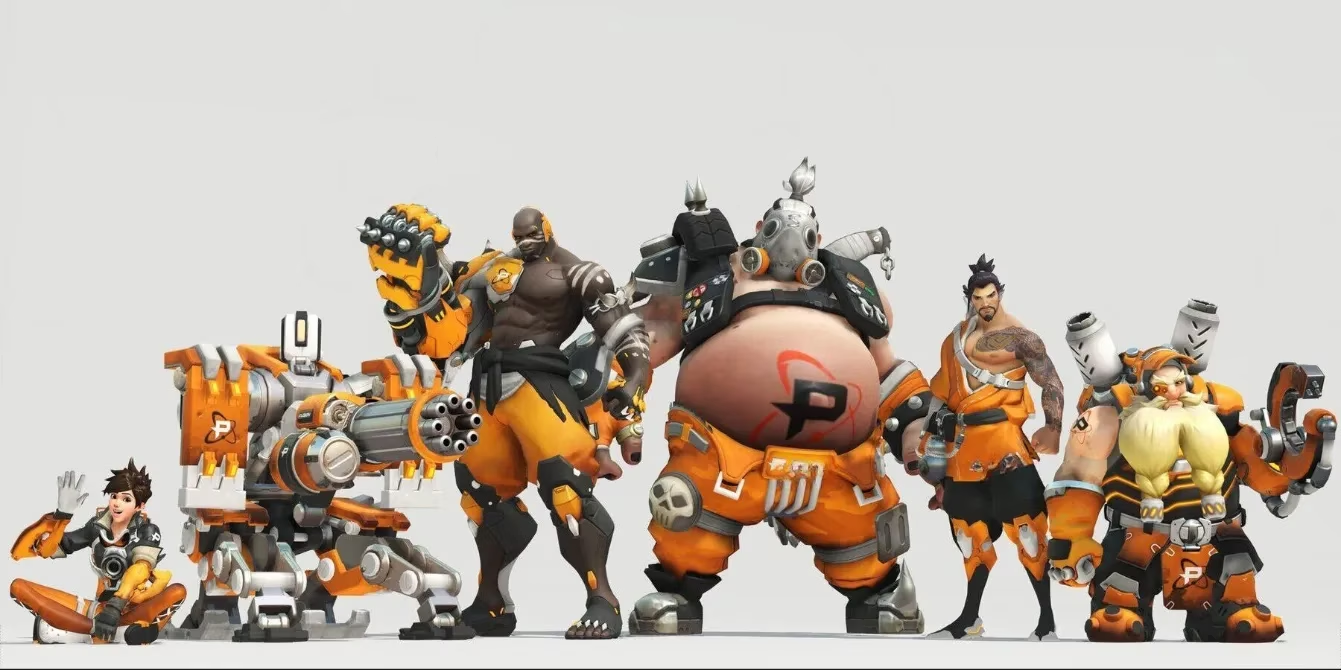
The League was our shared cathedral for six glorious, tumultuous years. It was a global stage where the impossible became routine, where geography dissolved into pure, electrifying competition. I remember the seismic shifts of each season's climax, the Grand Finals that felt like world events. Then came the silence before the storm—2023, when the teams, those very pillars of the structure, collectively asked for release. They sought freedom from the franchise fees, a signal that the old model could no longer contain the game's spirit. Blizzard listened, and with a heavy, final sigh, they folded the League. The announcement was a cold, corporate closure, but it felt like the end of an era written in neon and adrenaline. They promised a new path, a different structure for Overwatch 2's competitive soul. The cathedral was closed, but we, the faithful, lingered in the courtyard.
Finding this mural was like uncovering a time capsule. The Reddit user who shared it, Abstractionss, didn't just post a picture; they threw a stone into a still pond of nostalgia. The comments section became a wake and a celebration. We, the fans, swarmed it with our fondest relics:
-
The Meta Snapshot: "Six heroes," someone pointed out with the keen eye of an archaeologist. "It's pre-OW2." Indeed, this artwork is frozen in the 6v6 era, a testament to a faster, more chaotic dance we once knew.
-
The Inside Joke: "No supports!" another laughed, and we all remembered. The wild, seemingly reckless team comps that defined so many League matches—the pure, unadulterated dive, the frantic scramble that sometimes forgot the healers in pursuit of glory.
-
The Personal Shrines: Stories poured in about local watch parties, about wearing Fusion jerseys to school or work, about that one perfect play from Carpe or Alarm that made you leap from your couch. The mural wasn't just a Philadelphia landmark; it became a personal touchstone for anyone who ever cheered for a color, a logo, a home they chose on a digital map.
Yet, nature abhors a vacuum, and so does esports. From the ashes of the closed, franchise model, something new and wild has grown. Blizzard, in partnership with ESL FaceIt Group, seeded the Overwatch Champions Series (OWCS). This is not a walled garden; it is an open field. Its philosophy is beautifully, brutally simple: if you have the skill, the gate is open. The path is clear, a gauntlet for any who dare:
| The OWCS Path to Glory | Description |
|---|---|
| Open Qualifiers 🏹 | The great leveler. Amateurs, veterans, mix-teams—all fight through these online crucibles. |
| Main Event ⚔️ | The survivors earn their spot in this prestigious series, battling for ranking and pride. |
| International Major 🌍 | The pinnacle. A live, in-person spectacle where regional champions collide. The first, at DreamHack Dallas in 2024, was a promise fulfilled. |
This ecosystem breathes. It is decentralized, volatile, and thrilling. It lacks the polished, corporate narrative of the League, but it makes up for it with raw, unfiltered passion. Every match in an Open Qualifier could birth the next dynasty. The spirit of competition didn't die; it simply evolved, becoming more democratic, more chaotic, and in many ways, more true to the game's grassroots heart.
So I stand back, the Philadelphia skyline framing this painted memorial. The mural is a eulogy for one world. The vibrant, ongoing chatter of the OWCS circuit is the living, breathing heir to another. The Fusion's orange and black are faded, but the fire they represent has not been extinguished—it has scattered into a thousand smaller, brighter flames across the global ranked ladder and open qualifiers. The League taught us how to love a team, a city, a story. The OWCS teaches us to love the climb, the upset, the beautiful, unpredictable chaos of pure competition. One is a finished masterpiece, admired behind glass. The other is an endless, unfolding canvas, waiting for the next bold stroke of color. I am a citizen of both worlds, forever nostalgic for the roar of the past, yet irresistibly drawn to the silent, focused intensity of the next match about to begin.