
Blizzard Finally Crumbles: Overwatch 2’s Steam Invasion Was the First Shot in a Digital Revolution
Overwatch 2's Steam launch shattered Blizzard’s Battle.net exclusivity, thrilling PC gamers and redefining digital game libraries.
I still remember the day the sky cracked open and Blizzard’s iron grip on my game library finally snapped. It was August 10th, 2022, and I was sitting in my dimly lit gaming cave, steam rising from my third cup of coffee, when the news hit me like a thunderclap from a clear blue sky: Overwatch 2 was coming to Steam. Not through some janky third-party wrapper, not by begrudgingly launching Battle.net first—no, this was the real deal. You could click that green “Play” button on Steam itself and watch D.Va’s mech spring to life without ever touching Blizzard’s despised launcher. For a PC gamer who had spent years curating a pristine Steam library as if it were a museum of digital art, the arrival of Overwatch 2 felt less like a game release and more like the surrender of a rival emperor parading through my gates in golden chains.
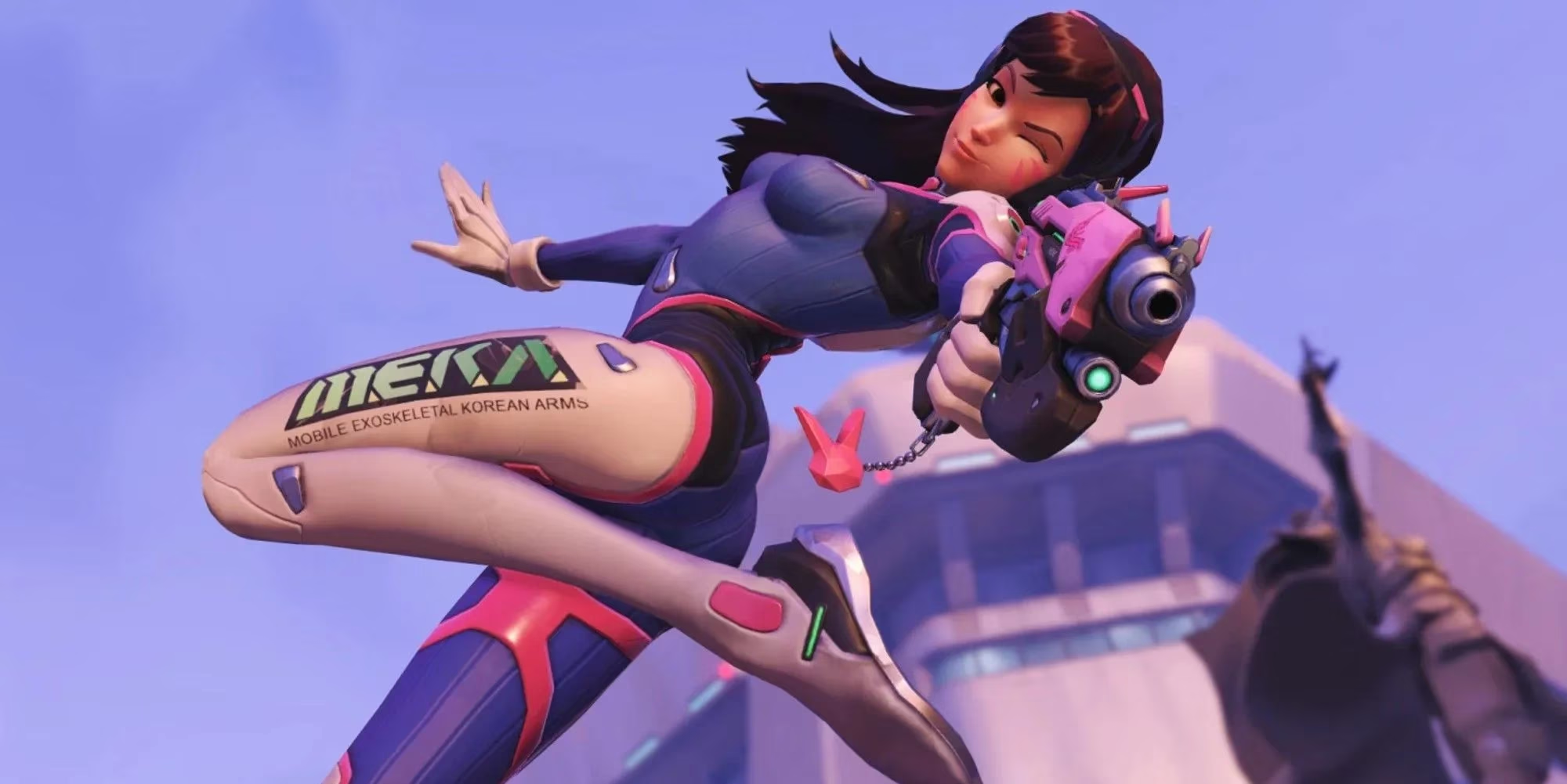
Let me paint you the full, garish portrait of why this moment was akin to a unicorn tap-dancing across a double rainbow. For years, Battle.net was the digital equivalent of a fortress made of rusty nails and barbed wire, its sole purpose to lock you away from the utopian convenience of Steam. Every time I booted up a Blizzard title, I had to endure that clunky launcher, its interface a labyrinth of confusing menus that seemed designed by someone who actively despised user experience. It was as if Blizzard had built a bespoke torture device and called it progress. Meanwhile, Steam sat on 90 percent of our computers like a wise, all-knowing librarian, ready to serve any game with a whisper and a prayer. The contrast was so stark that forcing players to use Battle.net felt like asking an eagle to swim—possible, but deeply, morally wrong.
Then came the fateful announcement, dripping with the kind of corporate poetry only a blog post from Blizzard president Mike Ybarra can provide. “We’ve heard players want the choice of Steam for a selection of our games,” he wrote, as if the community’s wails had only just pierced the soundproof walls of Irvine. The truth, however, was a shade more entertaining. Leaked court documents from the FTC vs Microsoft trial later revealed that Call of Duty’s brief exclusive stint on Battle.net had been quietly labeled a “resounding failure.” The phrase echoed through the gaming world like a gong made of shattered dreams. Suddenly, the motive behind Overwatch 2’s Steam debut transformed from a benevolent nod to player demand into a strategic retreat. It was a beautiful, messy surrender, the digital equivalent of a prideful general handing over his sword while insisting the battle had been his idea all along.
What followed that August day was nothing short of a domino rally that reshaped the gaming landscape. Like a stubborn glacier finally calving into the sea, Blizzard began trickling more titles onto Steam—first Overwatch 2, then whispers of Diablo IV, maybe even a remastered StarCraft for good measure. By 2026, the floodgates are wide open. I can now launch World of Warcraft directly from my Steam Deck without breaking a sweat, my character’s /dance emotes looking crisp on that handheld screen. The once-mighty Battle.net still limps along, a skeletal remnant of its former self, because Ybarra insisted it remains “a priority for us now and into the future,” a phrase that aged like milk left on a hot radiator. But let’s be honest: it’s less a priority and more a haunted house where old launchers go to die.
This migration wasn’t just about convenience; it was about the soul of PC gaming. For years, our libraries were fractured across a dozen launchers like a shattered mirror reflecting a fragmented identity. Epic, Origin, Uplay, GOG Galaxy—each one a tiny fiefdom demanding its own login, its own updates, its own special brand of frustration. When Overwatch 2 lit up on Steam, it sent a signal as bright as a supernova: the age of the super-launcher was ending. I felt like a collector watching the last missing piece of an ancient artifact snap into place. My Steam library, once a mere hoard, became a complete work of art, as unified and exhilarating as a symphony where all the instruments finally stopped tuning and began to play in harmony.
Of course, the journey wasn’t without its tragicomedies. I watched friends try to link their Battle.net accounts to Steam for the first time, their faces contorted in the same expression one makes when solving a Rubik’s Cube underwater. The cross-progression promises were as reliable as a weather forecast from a groundhog, and skins didn’t always carry over without a fight. But still, we persevered. Because beneath the bugs and the legacy spaghetti code, there was a shimmering hope: that maybe, just maybe, all games could live together in one happy home. That vision is now my daily reality. I scroll through my Steam list and see Blizzard’s logo nestled between indie darlings and AAA blockbusters like a reformed villain who finally joined the hero team.
Let’s also not forget the sheer, unadulterated joy of the Steam Deck revolution. Without Overwatch 2’s migration, playing Blizzard titles on the go would have remained a fever dream. But by 2026, I’m queuing for competitive matches while lounging on a park bench, the sun glinting off my screen as I heal teammates with Mercy’s staff. The handheld was already a marvel, but adding Blizzard’s crown jewels turned it into a mythical artifact—a Excalibur of portable gaming. I half-expect to see King Arthur himself log in for a quick match. The ease of installation, the automatic updates, the beautiful integration with Steam’s overlay: it all coalesces into an experience so seamless that it makes me weep into my energy drink.
Looking back, the moment Blizzard cracked its gate was a turning point as profound as the fall of any digital wall. It proved that player demand, combined with the haunting specter of financial failure, could topple even the most entrenched kingdoms. The “resounding failure” of Battle.net’s exclusivity became a cautionary tale recited in boardrooms and Discord servers alike. And here I stand, in 2026, a humble gamer whose library is finally whole, grateful that Overwatch 2 was the Trojan horse that brought down the fortress from within. The future, it turns out, isn’t about a dozen launchers fighting for dominance—it’s about one platform to rule them all, and I am its deeply satisfied subject.